How to find out if a tuning accessory is approved before buying: a reliable guide
“This product is approved”: this is probably the most used, and most misused, phrase in the online tuning accessories trade. It instantly reassures, gives the impression that everything is sorted, and yet, in the vast majority of cases, it means absolutely nothing specific. How, concretely, can you tell if a tuning accessory is genuinely approved before buying it—and above all, what does “approved” really mean for the part you are looking at?
This guide is not a product-by-product guide: it is a method, a framework you can apply to any tuning accessory, whether from us or elsewhere, to seriously assess its level of compliance before pulling out your credit card. We rely on the official definitions from service-public.fr and securite-routiere.gouv.fr, and on our experience as a specialist retailer, to give you concrete tools rather than a marketing slogan.

We must also speak frankly: this confusion surrounding the word “approved” is not always innocent. Some sellers, particularly on peer-to-peer resale platforms or in unscrupulous shops, deliberately use this term as a sales pitch without ever having checked themselves what it covers for the product in question. This is not necessarily blatant dishonesty—sometimes it is simply negligence—but the result for you, the buyer, is the same: information that seems reassuring but is based on nothing verifiable. This guide gives you the tools to no longer rely on a seller's assumed good faith, and to assess for yourself, using a simple and reproducible method, the level of confidence a given product deserves.
“Approved”: a word that actually covers several different realities
The first trap is that the word “approved” is used interchangeably for very different things. At least three concepts must be distinguished.
European type approval concerns specific categories of parts (wheels, glass, certain lighting devices, replacement exhaust systems) that must comply with a harmonized technical standard and bear a regulatory marking (such as the “e” marking followed by a country code). This is the strictest and most objectively verifiable definition: either the marking exists and is authentic, or it does not.
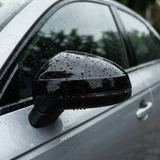
Compliance with the technical inspection is a different concept: a part may not fall under any type approval procedure (as is the case with most aesthetic accessories such as grilles, mirror caps, and diffusers) and yet be perfectly accepted at the technical inspection, provided it complies with the general rules of mounting, safety, and non-alteration of the vehicle.
Individual approval (RTI) is a third concept, an individual administrative procedure by which a modified vehicle is recognized as compliant, independently of any type approval of the part itself.
A seller who simply tells you “it's approved” without specifying which of these three realities they are referring to is, in practice, giving you no useful information. The first thing to do is therefore to ask them: approved in the sense of which procedure exactly?
Why we chose to write this guide rather than simply state “approved”
We could have, like many players in the industry, contented ourselves with adding the word “approved” to our product pages without further detail, relying on the immediate reassuring effect of the term. We chose the opposite approach: to detail, category by category, what compliance really means, even if it means admitting that some questions go beyond our role as a seller and fall under the final judgment of a technical inspector or a competent authority. This choice of transparency stems from the fact that lasting customer trust is built on honest and verifiable information, not on a commercial promise that collapses at the first slightly probing question. This is the philosophy that structures all our product pages and guides on regulatory topics in automotive tuning.
The 5 trust signals to look for on a product page
Even before contacting a seller, a well-constructed product page should answer a number of questions on its own. Here are the five signals we recommend checking systematically, whether on our site or any other.
1. Precise compatibility by vehicle generation. A page that states “for BMW 3 Series” without specifying the exact generation (E46, E90, F30, G20) and the years covered is a red flag: it suggests that the seller has not checked the actual fit of the part, which greatly increases the risk of insufficient mounting—one of the main reasons for a counter-inspection at the technical inspection.
2. Clearly stated material and mounting method. ABS, genuine carbon fiber, carbon replica: this information must be clear, as must the mounting method (original clips, 3M adhesive, screws, rivets).
3. An honest statement of limitations. A product page that acknowledges that final compliance depends on your specific vehicle and the inspector's judgment at the time of inspection is, paradoxically, more trustworthy than a page that promises universal approval without qualification.
4. Actual photos of the product, if possible mounted on the vehicle in question, rather than only generic 3D renders that do not allow you to judge the actual build quality.
5. Verifiable customer reviews and an identifiable after-sales service (address, SIRET, contact method), which will allow you to seek recourse in the event of a compliance issue discovered after purchase.

The red flags that should alert you about a seller
In contrast to trust signals, certain wording or practices should make you suspicious. “100% approved, guaranteed to pass the technical inspection” is a promise that no serious seller can make absolutely, because the final decision always belongs to the authorized inspector on the day of inspection, depending on the condition of the vehicle and the installation carried out—no one can guarantee in advance the judgment of an independent third party. A total lack of information on precise compatibility, with product pages that settle for a generic title without dimensions or vehicle generation, is a sign that the seller has probably not checked the compliance of what they sell themselves. An abnormally low price compared to comparable products can also be an indicator of lower-quality materials or mountings, which increase the risk of a defect discovered at the technical inspection. Finally, the absence of any mention of the competent authorities (service-public.fr, DREAL, technical inspection) in the documentation of a product with a regulatory dimension may suggest that the seller simply has not taken the matter seriously.
▸ Our recommended accessories


Why this confusion sometimes benefits unscrupulous sellers
It is useful to understand why this ambiguity surrounding the word “approved” persists in online commerce, despite its misleading nature. From a purely commercial point of view, the word reassures and converts: a rushed buyer who sees “approved product” in the title or description has less reason to look further and completes their purchase more quickly. This dynamic creates an incentive, even unconscious, to use the term broadly, without always taking the time to specify which procedure it refers to.
How to concretely check the e/E marking when it applies
For the categories of parts genuinely subject to type approval (wheels, certain lighting devices, functional replacement exhaust systems), the regulatory marking must be visible directly on the part itself. This marking must be physically verifiable on the received product, and not just mentioned in the marketing text of the product page.
For aesthetic accessories that do not fall under this type approval logic (grilles, mirror caps, diffusers, wheel arch extensions, decorative tips), there is no e/E marking to look for, and its absence is absolutely not a defect.

The difference between “legal” and “approved”: a nuance that changes everything
An accessory can be perfectly legal to install without necessarily falling under any type approval procedure, simply because this product category is not subject to this regime. This is the case for almost all aesthetic bodywork and interior accessories.
Product category comparison: where to look for what information
For a grille or mirror caps, the bulk of confidence rests on precise compatibility and mounting quality. For a diffuser with exhaust tips, you must distinguish decorative tips (same logic as bodywork) from muffler or full-line replacements (which fall under e/E marking). For wheel arch extensions or a wide body kit, the key question becomes that of the impact on the approved overall width and therefore the eventual individual approval.
The most common mistakes made by buyers
Mistake no. 1: relying solely on the word “approved” in the product title. Mistake no. 2: not checking the exact generation of your vehicle before comparing prices between sellers. Mistake no. 3: not asking the seller any questions before purchase. Mistake no. 4: confusing the absence of visible complaints on social media with proof of compliance. Mistake no. 5: neglecting the documentation received with the product (invoice, technical sheet), which nevertheless constitutes your best protection in the event of a later question.
The role of the technical inspection as final validation, not as a prior guarantee
No seller, including us, can guarantee you 100% that a part will pass the technical inspection on your specific vehicle, because the final decision always belongs to the authorized inspector. What we can guarantee you is the manufacturing quality of the product, the precision of its stated compatibility, and the honesty of our documentation on points of vigilance.
What we do at Becquet Voiture to earn this trust
On every product page with a regulatory dimension in our catalog, we apply the method we have just detailed: compatibility specified by the exact vehicle generation, material and mounting method clearly indicated, an honest mention of the fact that final compliance falls under the judgment of the inspector, and a link to official resources for questions that go beyond our role as a seller.

The final checklist before clicking “Add to cart”
Is the exact generation of my vehicle clearly stated on the product page? Are the material and mounting method clearly indicated? If the part falls under a category subject to e/E marking, is this marking visible on the product photos? Does the product page honestly acknowledge the limits of what it can guarantee? Does the seller have an identifiable contact and verifiable customer reviews? Have I, if necessary, checked with my prefecture or the DREAL if my planned modification requires a declaration? If you can answer positively to these six points, you are buying with full knowledge.
Frequently asked questions
Is a “CE approved” product automatically accepted at the French technical inspection?
Not automatically. The CE marking generally attests to compliance with general product safety standards, which is different from a type approval specific to the automotive field.
How do I know if my project requires individual approval?
This is the case when the modification significantly changes a characteristic indicated on your registration certificate. In case of doubt, contact your regional DREAL directly.
Are the cheapest accessories systematically less compliant?
Not systematically, but a significant price difference compared to comparable products deserves an additional check.
Is there a single body that certifies all tuning accessories in France?
No. Compliance is assessed category by category, according to the principles detailed in this guide.
Should I be wary of a product that does not mention any regulatory information?
It depends on the category. For a purely aesthetic accessory (seat cover, headrest cushion), the absence of regulatory mention is normal.
The case of purely aesthetic accessories: do not over-apply vigilance
Seat covers, headrest cushions, gear shift knobs, steering wheel covers, decorative carbon fiber inserts: these categories of purely interior and aesthetic accessories do not change any regulated characteristic of the vehicle. The vigilance described in this guide must be proportionate to the nature of the modification being considered: maximum for anything affecting exterior dimensions, minimal for purely decorative interior accessories.
In summary
Knowing whether a tuning accessory is "approved" begins with understanding that there are several different levels of compliance—type approval with e/E marking, general compliance with the technical inspection, individual approval—and that no serious seller can reduce this complexity to a simple "yes, it's approved" without further clarification.
Find our entire catalog of tuning accessories, documented using this method, on our shop. To learn more about the regulatory topics mentioned in this guide, also check out our articles fender flares and wheel spacers: the law in France and wide body kits and registration: the procedure.
Recevez nos prochains guides en avant-première
Tutos pose, comparatifs aftermarket vs origine, sélection M Performance/AMG/RS, codes promos exclusifs.