Reliability of the BMW M57 diesel engine: what you need to know before buying
BMW M57 diesel engine reliability: what you need to know before buying
The BMW M57 diesel engine remains one of the most respected six-cylinder blocks in the brand's recent history, fitted between 1998 and 2012 to a wide range of models, from the 3 Series E46 to the X5 E53/E70, as well as the 5 Series E39/E60, the 7 Series E38/E65 and even some Range Rovers of the era under license. Renowned for its generous torque, refined sound and overall robustness, the M57 is nevertheless not without points of concern that should be precisely understood before buying a vehicle equipped with one. This guide details all versions of the M57, its documented weaknesses and the best practices to follow for a worry-free purchase.
The M57 in brief: a six-cylinder that left its mark on its era

Introduced in 1998 to succeed the four-cylinder M51 and the original M57 in the 5 Series E39, this inline six-cylinder common-rail direct injection diesel engine quickly earned a reputation for excellence, praised at the time for its efficiency, torque available from low revs and driving refinement previously unheard of in a diesel. It equipped an impressive list of BMW models: 3 Series E46/E90, 5 Series E39/E60, 6 Series E63, 7 Series E38/E65, X3 E83, X5 E53/E70, as well as, less commonly known, certain Range Rover L322s under a supply agreement with Land Rover. Its fourteen-year production run makes it one of the most widely used and well-documented BMW diesel engines on today's used market.
The three main evolutions of the M57: M57, M57TU, M57TU2
| Version | Period | Power | Main developments |
|---|---|---|---|
| M57 (first generation) | 1998-2002 | 136-193 hp (depending on 25d/30d) | First-generation common-rail injection, single or twin turbo depending on version |
| M57TU | 2002-2005 | 163-218 hp | Piezoelectric injectors (second-generation common-rail), increased injection pressure, improved efficiency |
| M57TU2 | 2005-2012 | 197-286 hp | Tri-turbo architecture on the 335d/M57S, enhanced emissions control, final evolution before the N57 |
This distinction between the three generations is not merely a technical curiosity: it has a direct impact on the points of concern to be aware of. The M57TU and M57TU2 piezoelectric injectors, more precise and higher-performing than the first generation's electromagnetic injectors, are also more expensive to replace if they fail, a factor to consider in the maintenance budget. The M57S tri-turbo version, exclusive to the 335d and certain high-end 730d/740d 7 Series models, adds another level of mechanical complexity that deserves special attention when buying.
The number one point of concern: intake swirl flaps

The most documented and feared problem on the M57, particularly on the first-generation and M57TU versions, concerns the variable intake flaps (often called "swirl flaps" or turbulence flaps), small metal flaps located in the intake manifold that optimize cylinder filling at low revs. On some examples, particularly older or poorly maintained ones, these flaps can become unseated from their pivot, and in the most serious cases, detach completely and be sucked into a cylinder. The consequences can then be very serious: damage to the piston, valve or cylinder head, which may require a complete engine rebuild in extreme cases.
Early warning signs include power loss at low revs, an uneven idle, a warning light with a fault code related to the variable intake manifold, or an unusual metallic noise when accelerating. Many owners and professionals recommend, as a preventive measure, simply removing these flaps (an operation commonly known as a "swirl flap delete" in the BMW community), combined with reprogramming or recalibrating the ECU to compensate for their absence. This preventive measure, carried out by a BMW diesel specialist, permanently eliminates the risk while preserving engine performance in almost all cases.
EGR valve and intake manifold fouling
As with almost all diesel engines from this generation across all manufacturers, the M57's EGR (exhaust gas recirculation) valve is prone to gradual fouling from carbon deposits, particularly with predominantly low-speed urban use. A fouled EGR valve can result in an uneven idle, power loss, black smoke when accelerating or an engine warning light. Periodic cleaning, or even replacement on older examples, is part of the routine maintenance to anticipate. Some owners opt for an "EGR delete" (software disabling of the valve), a practice that is not approved for road use in France and can lead to a failed technical inspection or vehicle non-compliance; we do not recommend this practice and invite concerned owners to check the current regulations before carrying out any such intervention.
Turbocharger(s): from single turbo to M57S tri-turbo

The M57 has featured several turbocharging architectures depending on the version and power level: a single turbo on the entry-level versions (25d, the least powerful 30d), variable geometry turbo on the intermediate versions, sequential twin turbo on certain high-end 330d/335d models, and finally the unique tri-turbo architecture of the M57S equipping the 335d, which was the most powerful diesel series car in the world at its launch. The more turbos there are, the greater the complexity of the turbocharging system, with direct consequences for the cost of diagnosis and repair if it fails. An unusual whistle, excessive blue or black smoke, or progressive power loss are classic signs of turbo failure that should be checked without delay, as continuing to use an engine with a failed turbo can lead to the oil circuit becoming contaminated with metal debris.
Timing chain: a generally reassuring point on the M57
As with the M47, N47 and N57, the M57's timing chain is located at the rear of the block, on the flywheel side — not at the front, on the accessory side. The consequence is practical: to access it, the gearbox must be removed, and on most models, the engine must be pulled out, which significantly increases labour costs compared to a timing chain accessible from the front. What the M57 does not share with the N47 is the structural problem of the widely documented chain issue on the latter: the position is the same, but the reputation is not. Feedback on the M57 timing chain is generally reassuring, with no major structural weakness identified comparable to that of the N47. A slight chain noise when cold remains possible on older or poorly maintained examples, however, without being systematic. We also detail the specific case of the N47 in our dedicated article: BMW N47 engine reliability and timing chain: everything you need to know, useful for comparing the two generations of BMW diesels if you are undecided between several models.
Injectors and high-pressure pump: the most expensive wear item

On a common-rail diesel engine like the M57, the injectors and high-pressure pump naturally constitute the most expensive wear item in the long term, particularly on the M57TU and M57TU2 versions equipped with piezoelectric injectors that are more expensive per unit than the first-generation electromagnetic injectors. A failed injector generally results in an uneven idle, a more pronounced operating noise on the affected cylinder, exhaust smoke or localized power loss. The quality of the fuel used over the vehicle's lifespan has a direct impact on the longevity of these components: a history of using low-quality fuel or non-recommended additives can accelerate their premature wear.
Vacuum pump and power brake assistance
Less well-known than the previous points but regularly mentioned in feedback, the vacuum pump that powers the brake assistance can experience progressive wear at high mileages, resulting in a harder-than-usual brake pedal or a degraded response time for the assistance. This point deserves to be tested during any road test, particularly on a vehicle exceeding 150,000 to 200,000 km, as the vacuum pump remains a normal wear part on this type of engine and is not specific to a design flaw.
Particle filter (DPF) on the most recent versions

From the mid-2000s, regulatory changes led to the M57TU2 being progressively equipped with a particle filter on most European markets. As with all diesel engines equipped with this device, exclusively low-speed urban use promotes the gradual fouling of the filter, which can result in power loss, an engine warning light or excessive oil consumption due to overly frequent forced regenerations. Regular road use allowing for complete regenerations greatly limits this risk, a point to consider seriously according to your usage profile before buying a vehicle equipped with this engine.
The M57 model by model: what changes depending on the car
Although the engine block remains largely identical in its architecture from one vehicle generation to the next, its integration, mapping and mechanical environment vary considerably depending on the model that houses it, with practical consequences for a buyer.
3 Series E46/E90 (330d, 330xd): on this lighter body style, the M57 offers particularly lively driving sensations for a diesel of its era. Access to peripheral components (turbo, intake manifold) remains relatively easy compared to larger models, which limits the labour cost in the event of work on the intake flaps or the turbo.
5 Series E39/E60 (530d, 535d, 525d): the historic home of the M57, the 5 Series benefits from a mature integration of the engine, with a more spacious engine compartment facilitating maintenance. The E60 535d, in particular, is highly sought after by enthusiasts for its excellent torque-to-refinement ratio.
7 Series E38/E65 (730d, 740d, 750d): on this heavier large sedan, the M57 (and its M57S tri-turbo version on the 750d) must work harder to move the vehicle's mass, which can slightly accelerate the wear of certain components such as brake pads and tyres, without having a direct impact on the longevity of the engine block itself.
X3 E83 and X5 E53/E70 (30d, 35d): on these SUVs, the M57 fully benefits from its generous torque to offer appreciated driving sensations and a good towing capacity. The higher ground clearance exposes the engine block and its peripherals more to projections and moisture during light off-road use, a point to check during the inspection under the vehicle.
Range Rover L322 (TDV8, derivative): less well-known to the general public, a supply agreement between BMW and Land Rover allowed the use of a base derived from the M57 on certain versions of the Range Rover L322 in the early 2000s, before the arrival of Jaguar Land Rover's own engines. The points of concern remain largely comparable to those detailed in this guide, with parts availability sometimes more complex to arrange through the Land Rover network.
Detailed physical inspection guide: point by point before signing
Beyond the specific mechanical check of the M57 already detailed, a methodical inspection of the vehicle as a whole allows you to avoid the majority of unpleasant surprises. Here is the recommended method, in the order we advise carrying it out during a visit.
Cold start, hood open: this is the most revealing moment for an M57 engine. Listen carefully to the first few seconds after starting: an idle that struggles to stabilize, an unusual metallic noise or excessive exhaust smoke are all signals to take seriously even before starting the road test.
Check the levels and the colour of the oil: very black and thick engine oil can indicate maintenance intervals that exceed recommendations, while diluted or unusually looking oil should raise concerns about a possible injection or cylinder head gasket problem. Also check for any traces of oil under the vehicle, particularly around the sump and the turbo.
Road test with brisk acceleration: plan for a test long enough for the engine to reach its normal operating temperature, including several brisk accelerations under load, the best way to reveal power loss related to the intake flaps, the EGR valve or the turbo. Also test the firmness of the brake pedal after several applications to detect any weakness in the vacuum pump.
Electronic diagnosis (OBD): if possible, have a diagnostic tool connected to read the fault codes stored in memory, including those recently cleared (some systems keep a history), an excellent way to detect a recurring problem hidden just before the sale.
Pre-purchase checklist: the points to check on a vehicle equipped with the M57
Recurring mechanical points of concern for the M57
▸ Our recommended accessories


Realistic annual maintenance budget, item by item
Anticipating the maintenance cost of a vehicle equipped with the M57 allows you to avoid unpleasant surprises after purchase. These amounts are indicative, excluding labor, which varies depending on the region and the professional chosen (a BMW diesel specialist is strongly recommended), and must be adapted to the exact engine version and the condition of the vehicle.
| Maintenance item | Indicative frequency | Indicative budget |
|---|---|---|
| Engine oil change + oil filter | Every 15,000 to 20,000 km or 1 year | €140 - €250 |
| Preventive removal of intake swirl flaps | Once, preventive removal recommended if not already done | €350 - €650 |
| EGR valve (cleaning or replacement) | Depending on condition, often after 120,000 km | €200 - €550 |
| Injector (single replacement) | Depending on condition, wear item | €250 - €500 per unit (piezo more expensive) |
| Turbocharger (replacement) | Depending on condition, more frequent on bi-turbo/tri-turbo | €900 - €2,200 depending on architecture |
| Vacuum pump | Depending on wear, often after 150,000 km | €200 - €400 |
| Technical inspection and miscellaneous | Every 2 years (or 1 year depending on regulations) | €85 - €155 |
In practice, the average annual budget for routine maintenance generally ranges between €500 and €1,100 for normal use on a vehicle that has already been treated for intake swirl flaps, although this budget can increase significantly in the year when major work (turbo, injectors) becomes necessary. This is precisely why a transparent maintenance history, with supporting invoices, is worth much more than a simple price reduction at purchase.
Traps to avoid when buying a vehicle equipped with the M57
Ignoring the intake swirl flap issue: always ask the seller if this preventive work has been carried out, and at what mileage. This is the most important question to ask about a vehicle equipped with the M57, even before considering the rest of the maintenance history.
An incomplete service book presented as "serviced at the dealership": always ask for detailed invoices rather than just a stamped service book, especially for the M57-specific items mentioned in this guide.
A "too attractive" price on a tri-turbo 335d or a 750d 7 Series: these high-end engines have higher maintenance costs, especially in the event of a turbo failure. A vehicle offered significantly below market value without a clear justification often hides neglected maintenance, which must be checked by a specialist before making any commitment.
No cold start test with hard acceleration: a seller who has "already warmed up the engine before your arrival" removes the possibility of detecting an irregular idle that could indicate a faulty intake swirl flap or EGR valve. Always ask to start the vehicle yourself when the engine is completely cold, and to perform several hard accelerations during the test drive.
Underestimating the cost of a turbo on a bi-turbo or tri-turbo version: replacing a turbo on a tri-turbo M57S 335d represents a significantly higher budget than on a single-turbo version, a point to consider seriously when negotiating the purchase price.
Ignoring undocumented engine reprogramming: some vehicles equipped with the M57 have undergone reprogramming aimed at increasing power, a practice that may have put more strain on the mechanical components, especially the injectors and turbo. Ask if the vehicle has been modified from its original configuration.
The M57 compared to its contemporaries: N57, OM642 (Mercedes), TDI V6 (Audi/VW)
In the premium six-cylinder diesel segment of the 2000s-2010s, the M57 faced direct rivals from Mercedes (OM642 V6 engine) and the Volkswagen/Audi group (V6 TDI). Each offers different characteristics and points of concern that are worth knowing.
Mercedes OM642 (V6 CDI): this diesel V6, fitted notably on the E-Class, S-Class, and ML of the same period, enjoys a generally good reputation for reliability, with its own points of concern regarding the variable geometry turbo and the cooling module. Unlike the inline M57, its V-architecture means more complex access to certain components for maintenance.
Audi/VW V6 TDI: this engine, widely used by the Volkswagen group during this period (Audi A6/A8, VW Touareg, Porsche Cayenne diesel), is renowned for its robustness, provided there is rigorous maintenance of the timing chain and EGR valve, points of concern generally comparable to those of the M57.
Overall, the M57 retains a particularly flattering reputation for engine refinement and available torque in the feedback collected, with a specific and well-identified point of concern (intake swirl flaps) which, once treated preventively, leaves room for generally reassuring long-term mechanics.
Why the M57 remains a benchmark among tuners and enthusiasts
Beyond its reputation with the general public, the M57 enjoys a special status in the diesel tuning community due to its high intrinsic power potential. The robust block architecture, the strength of its crankshaft and cylinder head, as well as the leeway offered by a well-executed engine reprogramming, have made it a regularly acclaimed engine for tuning projects ranging from a simple, reasonable torque gain to much more ambitious projects in certain specialized circles. This reputation, while enhancing the engine technically, implies increased vigilance when buying a used vehicle equipped with the M57: an undocumented reprogramming history, especially on a vehicle that has undergone significant power gains, should lead to enhanced inspection of the injectors, turbo, and clutch or torque converter, as these elements are the first to suffer from prolonged excessive strain over time.
Recommended preventive maintenance: the maximum longevity checklist
To maximize the lifespan of an M57 engine and avoid almost all the failures documented in this guide, here are the preventive maintenance recommendations generally shared by BMW diesel specialists and the experienced owner community. The preventive removal of intake swirl flaps, combined with an ECU recalibration, remains the absolute priority if this work has not already been carried out, regardless of the vehicle's mileage. Cleaning or replacing the EGR valve at the first signs of an irregular idle prevents a progressive deterioration that will be more costly to address later. An oil change that scrupulously follows the manufacturer's intervals, with high-quality oil compliant with BMW LongLife specifications, preserves the longevity of the injectors and high-pressure pump, the most expensive components to replace on this engine. Finally, regular visual inspection of the turbo (absence of smoke or whistling) and the vacuum pump (firmness of the brake pedal) allows for the early detection of wear which, if left untreated, can quickly worsen and result in a larger repair bill.
What owners report in daily use
Generally, user feedback collected from owners of well-maintained vehicles equipped with the M57 describes particularly pleasant mechanics, appreciated for their torque available from low revs and their hushed sound for a diesel of this era. The point cited most regularly, by far, concerns the preventive treatment of intake swirl flaps, a procedure now well known to the owner community and widely documented on specialized BMW diesel forums. Once this point has been addressed, feedback on the overall longevity of the block remains very favorable, with many reports of vehicles exceeding 300,000 or even 400,000 km without major engine overhauls. These reports remain general trends reported informally by users and independent maintenance professionals, and do not replace an individual diagnosis carried out by a qualified mechanic before purchase.
Expert opinion: strengths and weaknesses of the M57 engine
What we appreciate: generous torque and a particularly pleasant sound for a diesel of this generation, a generally reassuring timing chain unlike the N47 that succeeds it on smaller models, and remarkable longevity once the intake swirl flap issue has been treated preventively. Parts availability remains excellent for this widely used engine.
What deserves nuance: intake swirl flaps are the number one and virtually unavoidable point of concern for this engine, with a risk of serious engine damage in the event of an unanticipated failure. The increasing complexity of the turbocharging system on bi-turbo and tri-turbo versions also implies a potentially high repair budget in the event of a turbo failure. Finally, keep in mind that this engine, now ten to twenty-five years old depending on the vehicle, requires increased overall vigilance regarding all peripheral components (hoses, seals, wiring), as material aging can add to the points of concern specific to the M57 itself.
Frequently Asked Questions
What is the intake swirl flap issue on the M57?
These are small metal flaps located in the intake manifold that can become detached from their pivot with age and, in the most serious cases, be sucked into a cylinder, causing serious engine damage. Preventive removal by a specialist, combined with an ECU recalibration, eliminates this risk.
How can you tell if the intake swirl flaps have already been removed on a vehicle?
Always ask the seller for the corresponding invoice. In the absence of documentation, a BMW diesel specialist can generally check this point during a pre-purchase inspection.
Is the M57 more reliable than the N47 in smaller models?
In terms of the timing chain, yes: the M57 does not have the documented structural problem of the N47. However, the M57 has its own specific point of concern with the intake swirl flaps, which should not be overlooked.
Which BMW models are equipped with the M57 engine?
3 Series E46/E90, 5 Series E39/E60, 6 Series E63, 7 Series E38/E65, X3 E83, X5 E53/E70, as well as certain Range Rover L322 models under agreement with Land Rover, between 1998 and 2012 depending on the models and markets.
Is the tri-turbo 335d (M57S) reliable?
Its complex mechanics require more precise and costly maintenance than single or bi-turbo versions. Feedback remains generally favorable regarding the intrinsic robustness of the block, provided there is rigorous maintenance of the turbocharging system.
Should you have the intake swirl flaps removed even on a vehicle that runs well?
It is a preventive procedure widely recommended by the community and BMW diesel specialists, especially on a vehicle whose history is not documented on this specific point, as the cost of the procedure remains much lower than an engine overhaul in the event of failure.
What budget should be planned for a complete preventive maintenance of the M57?
Generally, plan between €350 and €650 for the preventive removal of intake swirl flaps, to which standard routine maintenance items are added (oil change, filters, EGR valve depending on condition).
Does the M57 consume a lot of oil?
Not abnormally in the overall feedback collected, provided there is regular maintenance. However, rising oil consumption should be monitored and may indicate a turbo at the end of its life on turbocharged versions.
Can you drive a vehicle equipped with the M57 for a long time?
Yes, many reports mention vehicles exceeding 300,000 to 400,000 km without major engine overhauls, provided there is rigorous maintenance and preventive treatment of the intake swirl flaps.
Is the M57 compatible with engine reprogramming?
Technically yes, a common practice on this engine renowned for its potential, but reprogramming puts more strain on the injectors and turbo. Always check if a used vehicle has been reprogrammed and have the affected components inspected accordingly.
What is the difference between the M57 and its successor, the N57?
The N57, which succeeds the M57 from 2008-2009 depending on the models, benefits from a modernized architecture, a lighter block, and even more precise injection, without the intake swirl flap weakness of the M57. However, the timing chain has not changed position: it is at the rear, on the engine side, on the M57 as on the N57. Both engines generally enjoy a good reputation for reliability within the BMW diesel range.
Is the M57 suitable for regular towing?
Yes, especially on the X3 and X5 versions with generous torque, widely used for towing trailers and caravans. An inspection of the condition of the hitch and its electrical wiring is recommended before purchase if the vehicle is equipped with one.
Which version of the M57 should be preferred for a risk-free first purchase?
A 530d or a 330d equipped with the M57TU or M57TU2, whose intake swirl flaps have already been treated preventively and whose maintenance history is documented, remains the most reassuring choice for a buyer unfamiliar with the specificities of this engine.
Is the M57 approved in low-emission zones?
This depends on the vehicle's exact Crit'Air classification, generally Crit'Air 2 for this generation, which should be checked systematically on the registration certificate before purchase if you regularly drive in dense urban areas.
How can you recognize a poorly maintained vehicle equipped with the M57?
Incomplete service book, absence of recent invoices, persistent irregular idle, excessive smoke on acceleration, engine light, or abnormally soft brake pedal are all signals to take seriously during the test drive.
Does replacing the intake swirl flaps void the manufacturer's warranty?
On a used vehicle that has been out of manufacturer's warranty for a long time, this question generally no longer arises. On a newer vehicle still under warranty, it is advisable to check the exact conditions with the BMW network before any unofficial intervention.
Can the M57 handle moderate reprogramming well?
The block is renowned for its robustness and generally tolerates a reasonable torque gain well, provided there is impeccable maintenance of the injectors, turbo, and transmission. However, an overly aggressive or poorly executed reprogramming accelerates the wear of these components.
Is there a particular risk on vehicles that have not driven much?
Very occasional use can promote the clogging of the EGR valve and the particulate filter on equipped versions, due to a lack of complete regenerations. A vehicle that is rarely used is therefore not automatically synonymous with preserved mechanics, contrary to a widespread idea.
Should you worry about a blown head gasket on the M57?
This is not a particularly documented weakness on this engine compared to the intake swirl flaps. However, classic monitoring of the level and color of the coolant, as well as the engine temperature, is still recommended as with any engine of this age.
Actual consumption and taxation depending on the versions
Beyond pure reliability, the exact version of the M57 and the vehicle it powers have a direct impact on real-world fuel consumption. On a well-maintained 330d 3 Series, you can generally expect a combined fuel consumption of between 6 and 7 l/100 km under regular road use. On a heavier 530d/535d 5 Series, this consumption generally rises to between 6.5 and 8 l/100 km depending on the version and driving style. On larger models such as the 750d 7 Series or the X5 35d, it is not uncommon to see a combined fuel consumption of 8 to 10 l/100 km, particularly on the tri-turbo M57S version driven dynamically. These figures remain indicative and vary greatly depending on the vehicle's maintenance, driving profile, and operating conditions.
From a tax perspective, the administrative power and CO2 emissions displayed on the registration certificate determine the cost of the registration certificate itself, as well as any applicable tax surcharge depending on the date of first registration and the regulations in force at the time of purchase. The oldest vehicles equipped with the M57, generally classified as Crit'Air 2, remain largely exempt from traffic restrictions in most French low-emission zones for now, but it is advisable to systematically check the exact Crit'Air classification of the vehicle in question if you regularly drive in dense urban areas, as this classification may change with local regulations.
Resale value and parts availability in 2026
The M57 now benefits from excellent parts availability, whether new original parts, re-use parts (specialized salvage yards), or aftermarket parts, a real asset given the massive production of this engine over nearly fourteen years and across a dozen different models. This availability greatly limits the risk of prolonged immobilization in the event of a breakdown, even for the most specific parts such as piezoelectric injectors or the turbos of the bi-turbo and tri-turbo versions. In terms of resale value, the most sought-after vehicles equipped with the M57 remain the 330d/335d 3 Series and 530d/535d 5 Series in good original condition, whose residual value holds up relatively well thanks to their reputation for refinement and robustness once the intake manifold valve issue has been addressed. The rarest and most exclusive versions, such as the tri-turbo 335d or the 750d 7 Series, produced in more limited quantities, appeal to discerning enthusiasts ready to accept a higher maintenance budget in exchange for exceptional engineering at now very affordable used prices.
Equipment and additional points of attention depending on the model chosen
Beyond the engine itself, certain peripheral elements deserve special attention depending on the exact model you are interested in. On versions equipped with the xDrive all-wheel-drive system (available on several 330xd, 530xd, X3, X5 variants), the maintenance of the transfer case and additional drive shafts must be included in the overall budget; we detail its operation in our dedicated article: BMW xDrive: operation, maintenance and reliability. On versions with an automatic gearbox, generally well-regarded ZF gearboxes from this period, a periodic gearbox oil change is still recommended despite manufacturer communications sometimes referring to a "lifetime" maintenance-free gearbox, a common point for almost all automatic BMWs of this generation.
M57 timing chain: where it really is, price and symptoms

This is the query that rises fastest around this block, and the one that circulates the most approximations. Google Suggest lists "M57 timing chain" as an entire family: M57 timing chain replacement, M57 timing chain kit, M57 timing chain price, M57 timing chain noise, M57 timing chain failure, M57 timing chain timing, not forgetting the M57N2 timing chain variant. Let's go through them in order.
Where is the chain? At the rear of the engine, on the flywheel side, against the clutch bell — not at the front on the pulley side. This is the common architecture for the entire family of modern BMW diesels: M47, M57, N47, N57. This says nothing about the strength of the chain; it says everything about the labor cost when it needs to be touched. To reach the sprockets, the workshop removes the gearbox, and on the majority of cramped longitudinal installations (5 Series, 7 Series, X5), it is faster to remove the powertrain than to work blindly under the tunnel.
Front or rear timing: what changes
- Access through the engine face
- Removal of the accessory belt and cover
- Labor on the order of one day
- Gearbox never touched
- This is NOT the case for the M57
- Access through the clutch bell
- Removal of gearbox, clutch or torque converter
- Dual-mass flywheel controlled during the process
- Often engine removed on 5 Series, 7 Series and X5
- Labor multiplied, identical parts
The kit and its contents. A serious M57 timing chain kit is not just a chain: it includes the primary chain and the secondary chain (catalogs refer to upper & lower timing chain), the sprockets, the tensioner or tensioners and the plastic guide pads. It is the pads and the tensioner that fail first, not the links. Replacing the chain without the pads is like doing the work twice, with a gearbox removal each time: on this engine, the savings on parts are always lost compared to the savings on labor.
The symptoms. A chain noise on the M57 is listened for with a cold engine, hood open, by placing yourself on the passenger side and not in front of the grille — since the chain is at the rear. We look for a dry, regular metallic clicking, which fades as it heats up: this is the signature of a tensioner that no longer builds oil pressure quickly enough at startup. A clicking that persists when hot, a timing fault recorded by the computer, or a long startup are more serious signals. Actual failure remains rare on the M57, unlike what is documented on the N47: on this point, our report on the N47 timing chain details why two engines of the same architecture do not have the same fate.
The price. This is the question asked, and the honest answer is one sentence: the parts are modest, the bill is made of labor. A quote is therefore read in the announced workshop hours, gearbox removal included, and not in the kit price. Always ask for the parts/labor breakdown separately, and have it specified if the dual-mass flywheel and clutch are replaced while access is open — the common practice of diesel specialists, and the only one that avoids having to take everything apart again eighteen months later.
Engine codes M57D30, 306D1, 306D2, 306D3, M57N, M57N2: decoding the variant
The searches "M57D30 engine", "M57N2", "M57 306D2", "M57 306D3" and "M57 D1" come up just after "M57 engine" in Google Suggest, even before "reliability". The reason is simple: on a used listing, on an invoice, or on a parts order, it is never "M57" that is written, but a long code. Knowing how to read it avoids buying the wrong cylinder head, the wrong turbo, or the wrong injector.
The logic of the designation. "M57" names the family, "D" indicates diesel, "30" the rounded displacement in deciliters — that is three liters. Then come the phase indices: M57 for the first generation, M57N (also called M57TU, Technische Überarbeitung, that is technical revision) for the second, M57N2 (or M57TU2) for the third. In parallel, BMW uses a purely numerical reference such as 306D1, 306D2, 306D3, 306D4 or 306D5: "3" for six cylinders, "06" for three liters, "D" for diesel, the final number identifying the precise variant. The two notations refer to the same engine, seen from two different manufacturer departments.
Reading an M57 engine code in four steps
- Find the codePartial P.3 field on the registration certificate, manufacturer's plate, or label on the block side near the oil filter. The seller who cannot say it has never opened the hood.
- Isolate the phaseBare M57, M57N/TU, M57N2/TU2: the phase determines the injector type, engine management, and the presence or absence of the DPF.
- Cross-reference with the yearThe same 5 Series can receive two phases depending on the production date. The year alone is not enough, the code decides.
- Order the partInjector, turbo, vacuum pump, timing chain kit: the reference is chosen based on the engine code, never on the commercial name "530d".
Why it matters at purchase. Two cars listed as "530d" can separate an M57N without a particulate filter from an M57N2 with DPF, with direct consequences on urban use, on the vignette, and on the cost of injectors. On the searches "M57N2 engine reliability" and "M57D30 engine reliability", the real question asked is therefore this: does the feedback read on a forum concern the same variant as the car you are about to buy? The same reasoning also applies to the four-cylinder engines of the same era, described in our guide to the BMW M47 diesel engine.
Removal of intake valves: kit, method, price and technical inspection
The previous section on the intake valves makes the diagnosis; this one answers the following question, the one the owner actually types once worried: "BMW intake valve delete", "swirl flap delete kit BMW M57", "BMW M57 swirl flap repair kit", "BMW M57 swirl flap actuator", "BMW M57 swirl flap size". These are five different intentions behind the same symptom.
Three possible treatments, not one. The first consists of reinstalling new original valves: we get the factory condition, and the risk returns with the mileage. The second, the most widespread among diesel specialists, consists of removing the manifold, removing the valves and installing solid plugs — the famous delete kit — then neutralizing the control on the engine management side so as not to generate a fault. The third, the worst, consists of ripping out the valves without plugging: the orifices left open disrupt the intake and the remaining screws eventually travel. An engine where you are told "the valves have been removed" without an invoice or photo deserves an endoscope before signing.
What a proper delete leaves as traces
- An invoice explicitly naming the installed plugs
- An intake manifold decalcified during the same intervention
- New manifold gaskets, never reused
- No permanent fault stored on the engine management side
- An EGR valve checked or replaced in the same process
- Photos of the open manifold before reassembly
And the technical inspection? The point to understand is that the French technical inspection does not disassemble anything: it measures. A properly performed delete, without a stored fault and without degradation of smoke opacity, is not seen on the test bench. A botched delete, on the other hand, will sooner or later result in an illuminated engine light — a reason for a re-test on its own — or by degraded opacity. In other words, the issue is not regulatory, it is mechanical: it is the quality of the intervention that decides, and especially the fact that the intake and EGR circuit has been treated as a whole. The same whole logic applies to cooling, detailed in our diagram of the 330d E46 cooling circuit.
M57 reprogramming: stage 1, stage 2, downpipe, intercooler and hybrid turbo
Around the M57 330d, Google Suggest is unambiguous: after "m57 330d turbo" come m57 330d downpipe, m57 330d stage 1, m57 330d stage 2, m57 330d intercooler, m57 330d stage 3 and m57 330d exhaust manifold; on the bi-turbo six-cylinder side, it is "BMW 535d E60 hybrid turbo" that dominates. The M57 reprogramming is therefore not a forum curiosity: it is the normal second life of this block.
What the block withstands, and why. The M57 owes its reputation among tuners to an oversized bottom end for its original power: steel crankshaft, cast iron block on the first phases, generous connecting rods. It is this margin, and not software magic, that explains why a purely software stage 1 goes through without drama on a healthy specimen. The important word is healthy: a reprogramming does not add reliability, it consumes what remains.
Margin consumed by component when increasing power
| Injectors and high-pressure pump | 85 % |
| Variable geometry turbo | 80 % |
| Clutch and dual-mass flywheel | 90 % |
| Intake air cooling | 70 % |
| Automatic gearbox and maximum allowable torque | 75 % |
| Bottom end (crankshaft, connecting rods) | 30 % |
The logical order of modifications. The downpipe and the intercooler are not installed "in addition" to a map: they make it sustainable over time, by lowering the exhaust backpressure and the intake temperature. Increasing power without them is making the turbo and injectors work in a range where they no longer have a reserve. The hybrid turbo belongs to the level above and assumes that the clutch, the flywheel and the cooling have already been addressed. Two warnings apply to all these steps: the modification of the downpipe, which touches the anti-pollution device, falls outside the approved framework for road use in France, and undeclared power can be opposed by the insurer in the event of a claim. On a used vehicle, the question to ask the seller is therefore not "is it reprogrammed?" but "what parts accompanied the reprogramming, and with what invoices?".
Buying an M57 alone: used, exchange standard and graft on another vehicle
"Used M57 engine" is among the top five completions of the subject, and "M57 patrol engine" is not far behind: many are looking for the bare block, either to replace an unusable engine, or to graft it on a completely different vehicle. It is an old practice, precisely because the M57 was produced in very large numbers and has served well beyond BMWs.
Three ways to buy a block. The salvage engine, the cheapest, is bought by betting on the history of a car you will never see driven: the only counter-power is the seller's written warranty and a compression tester. The exchange standard engine, restored by a professional, costs more but is bought with traceability. The complete engine bought on a running vehicle remains the best option when it presents itself: we listen to the block run before taking out the wrench. In all three cases, the engine code seen above is what determines if the wiring harness, the computer, and the gearbox will follow.
The case of the graft. Installing an M57 on a 4x4 or a utility vehicle that has never received one is a notable transformation: it engages the vehicle's approval, its registration certificate, and its insurance, and is handled with a professional and an authorized body, not at the bottom of a garage. The fact that a mounting is mechanically possible does not make it administratively free — the nuance also applies to any used purchase whose history is unclear, a subject we detail in our method for detecting an accident or tampered mileage. And if your project is on the contrary to keep the car as it is by taking care of its appearance, our guide to the used 5 Series E39 and our report on the N57 diesel engine, direct successor of the M57 complete this reading usefully.
Equip a BMW with an M57 engine


Frequently Asked Questions About the BMW M57 Diesel Engine
Twelve questions that come up after reading a reliability guide, which the FAQ above did not cover: the actual position of the timing chain, reading engine codes, swirl flap treatment, and preparing for and purchasing a long block.
Where is the timing chain located on the BMW M57?
At the rear of the block, on the flywheel side, against the clutch bell—not at the front on the accessory side. This is the common architecture for BMW M47, M57, N47, and N57 diesels. The practical consequence: access requires removing the gearbox, and often pulling the engine on the 5 Series, 7 Series, and X5.
Does the M57 timing chain fail like the N47?
No. The chain's position is the same as on the N47, but the M57 does not have the documented structural problem of the latter. The failures observed on the M57 are due to normal wear of the guide rails and tensioner at very high mileages or neglected maintenance, not a design flaw.
How much does it cost to replace the timing chain on an M57?
The parts kit (primary and secondary chains, sprockets, tensioner, guides) remains modest; it is the labor that makes up the bill, since the gearbox must be removed. Ask for a quote detailing parts and workshop hours separately, and have the replacement of the clutch and dual-mass flywheel quoted while access is open.
What noise does a worn timing chain make on the M57?
A dry and regular metallic rattling, audible especially during a cold start, which subsides when the oil pressure rises. Listen on the firewall side, at the rear of the engine, not in front of the grille: that is where the chain is. A rattle that persists when warm or a recorded timing fault justifies a diagnostic without delay.
What do the codes M57D30, 306D2, 306D3, and M57N2 mean?
M57 designates the family, D for diesel, 30 for the three-liter displacement. M57N (or M57TU) is the second phase, M57N2 (or M57TU2) the third. The references 306D1, 306D2, 306D3, 306D4, and 306D5 are the numerical designation of the same engine: 3 for six cylinders, 06 for three liters, D for diesel, the last digit identifying the variation.
How do I know which version of the M57 is in my car?
The code is on the manufacturer's plate and on a block label, on the oil filter side; it can be cross-referenced with the VIN at a dealership or specialist. Do not rely solely on the commercial name: the same 530d can be an M57N or an M57N2 depending on the production date, with different injectors and emissions equipment.
Should the swirl flaps be removed or replaced?
Both have their arguments. Reinstalling original flaps restores the factory condition but brings back the risk with mileage; installing solid blanks, with proper engine management neutralization, removes it permanently. What should be refused is the removal of the flaps without blanking or an invoice.
Does removing the swirl flaps cause problems at the technical inspection?
The technical inspection does not remove the manifold: it measures. A properly carried out removal, without a stored fault or smoke opacity degradation, is not visible. A botched job betrays itself with an illuminated engine light, a reason for a re-test on its own, or by an out-of-tolerance opacity.
Can an M57 be reprogrammed to Stage 1 without failure?
On a healthy and well-maintained example, the M57 lower engine has a real margin. But a reprogram does not create reliability, it consumes what remains: the clutch, the dual-mass flywheel, the turbo, and the injectors take the difference. A modified downpipe also falls outside the road-legal framework, and undeclared power can be challenged by the insurer.
What is the reliability difference between the M57 and N57?
The N57 abandons the swirl flaps, the M57's main weak point, and modernizes the injection. The older M57 benefits from proven mechanics and lower parts costs. The timing is at the rear of the block on both engines: this is not a deciding factor.
Is a used M57 engine a good buy?
Yes, if the traceability is there. A standard exchange carried out by a professional can be purchased with a written warranty; a salvage block is purchased on faith in an unverifiable history and requires at least a compression test, a turbo examination, and an oil pan inspection. Check that the engine code matches the wiring harness and the ECU.
Can an M57 be fitted in another vehicle?
Mechanically, the swap is common as long as the block has been widely distributed. Administratively, it is a major modification that affects the vehicle's homologation, its registration document, and its insurance: it must be handled by a professional and an authorized body. A possible installation is not a free installation.
Frequent searches: M57 engine, BMW M57 engine, BMW M57 engine reliability, M57D30 engine, used M57 engine, M57 D1 engine, M57 306D2 engine, M57 306D3 engine, M57N2 engine, used BMW M57, BMW M57 data sheet, BMW M57N, BMW M57 or N57, M57 engine reliability, M57N2 engine reliability, M57D30 engine reliability, M57 engine reviews, M57 timing chain, M57N2 timing chain, BMW M57 timing chain, M57 timing chain replacement, M57 timing chain kit, M57 timing chain price, M57 timing chain noise, M57 timing chain failure, M57 timing chain timing, M57 vs N57, M57 vs N57 difference, M57 330d, M57 330d turbo, M57 330d downpipe, M57 330d stage 1, M57 330d stage 2, M57 330d intercooler, M57 reprogramming, BMW M57 swirl flap, BMW M57 swirl flap delete kit, BMW M57 swirl flap repair kit, BMW swirl flap removal, BMW swirl flap, BMW 530d EGR, BMW 535d E60 hybrid turbo, BMW 330d E46 reliability, BMW 530d E60 reliability, BMW 730d E65 reliability, BMW X5 E70 3.0d M57.
Do you own a vehicle equipped with the M57? Move on to customization
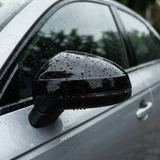
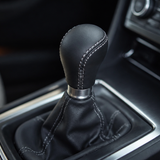
Once the mechanics are validated and the swirl flap issue addressed, it's time for style. At Becquet Voiture, our dedicated BMW range allows you to subtly modernize your diesel vehicle: M Performance look trunk spoilers, Shadow Line or Panamericana grilles, carbon mirror caps, paddle shifters, and LED lighting to perfect the interior and exterior finish.
Explore our selection: BMW performance accessories and BMW spoilers. Also read: BMW N47 engine reliability and timing chain, Used BMW 5 Series E39: our complete reliability guide, and BMW xDrive: operation, maintenance, and reliability.
This guide is provided for informational purposes and does not constitute financial advice or binding mechanical expertise. Always have the vehicle inspected by a qualified professional, ideally a BMW diesel specialist, before purchase.
Recevez nos prochains guides en avant-première
Tutos pose, comparatifs aftermarket vs origine, sélection M Performance/AMG/RS, codes promos exclusifs.