Custom-fit vs. universal seat covers: which one to choose to protect your interior
A €12 seat cover found in a supermarket and a several-hundred-euro cover custom-made for a specific model actually have almost nothing in common beyond their primary function. The difference between a universal seat cover and a custom-made cover lies in the cut, how well it holds up over time, access to seat-integrated controls (side airbag, heating, power memory), and, ultimately, the visual result once installed.
This guide compares the two approaches in detail, helping you make an informed choice based on your budget, how you use the vehicle, and your aesthetic standards, drawing on the custom-made references actually sold on becquet-voiture.com for Audi, Volkswagen, and BMW.

VW Golf 7 custom-made seat cover — view product
Universal cover: the economical equation that has its limits
The universal cover, sold in one size or a few broad variants (sedan, SUV), is designed to fit approximately a maximum of different vehicle models. Its main advantage remains the price, much lower than a custom-made solution, and its immediate availability. But this versatility comes at a cost in terms of fit quality: the cover must necessarily include extra fabric to adapt to various seat geometries, which results in visible creases, fabric that bunches up when the driver moves, and sometimes difficult access to elements integrated into the original seat.
On a recent vehicle equipped with a side airbag integrated into the seat — the case for almost all vehicles produced since the 2000s — a poorly designed universal cover can even pose a real safety problem: if the seam intended to release the airbag is not positioned exactly where the cushion must deploy, the deployment can be slowed, diverted, or even prevented. This is the most important point of vigilance to check before purchasing any universal cover, a subject we detail in another of our dedicated guides.
Custom-made cover: the exact cut of the original seat

The custom-made cover is cut and sewn from the precise pattern of the seat of a given vehicle model — this is the case for the references we offer for the Audi A3 8V, Audi Q8, Audi A4 B8 and B9, Audi Q5 8R, VW Golf 6 GTI, and Golf 7. Each seam corresponds exactly to the geometry of the original seat: shoulder shape, seat width, lumbar curvature areas, and, when the pattern provides for it, the location of the side airbag release seams. This last point is never inferred simply by the fact that a cover is sold as custom-made: as of August 18, 2026, out of the fourteen active seat covers in our catalog, only the product page for the Audi Q8 custom-made cover explicitly states that the side airbag deployment zones are respected. For all other references, airbag compatibility is checked page by page before ordering, and several of them ask the customer to report the equipment, or even send a photo of the AIRBAG label sewn into the side of the backrest.
This precision translates concretely into a cover that does not move, bunch up, or crease after several months of daily use, unlike a universal cover which tends to stretch and gradually slip. The visual result, once installed, is closer to a redesigned original upholstery than an added accessory, an important criterion for owners who wish to renew the appearance of their interior without giving it a visible "cover" look.

Audi Q8 custom-made seat cover — view product
Leather, material, and color: what a premium custom-made cover covers
The custom-made references in our catalog are offered in leather, with a choice of colors (black, white, beige, brown) allowing the cover to match the existing atmosphere in the interior or, conversely, completely renew it. Leather offers superior resistance to daily wear, repeated friction (getting in/out of the vehicle, seat belt), and simplified maintenance compared to fabric, at the cost of a larger investment than synthetic fabric alternatives.
The price of a custom-made cover, considerably higher than a universal version, is justified by the production cost specific to each vehicle's specific pattern (a Golf 7 cover is not interchangeable with an Audi Q8 cover) and by the raw material used. It is an investment to be put into perspective with the considerably longer lifespan and the real protection it provides to the original upholstery, especially on a vehicle you plan to keep for several years or resell in excellent condition.
▸ Our recommended accessories

Special case: side covers for sport seats
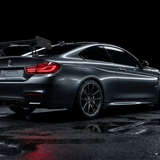
Vehicles equipped with sport bucket seats, such as the BMW M3 or M4 (F80, F82), have a very different geometry from a standard seat: more pronounced side bolsters, narrower contact area. On this type of seat, a classic universal cover simply cannot fit correctly, which explains the existence of specific references like our dedicated carbon side cover for the F80/F81/F82 and F83/F87, which precisely protects the most exposed friction areas (side bolsters) without covering the entire seat.

Carbon side cover BMW M3/M4 — view product
Side airbag compatibility: the #1 point of vigilance

On any vehicle equipped with a side airbag integrated into the seat (the standard since the early 2000s), the installed cover must imperatively respect the location of the release seam provided by the manufacturer. A custom-made cover can incorporate this constraint from the design of the pattern, but custom-made does not mean guaranteed: the product page of the precise reference is authoritative, and only one of ours, the Audi Q8 custom-made cover, states in black and white that the deployment zones are respected. If the product page does not say so, consider that the point is not settled and ask the question before buying. A universal cover, on the other hand, cannot by definition guarantee this precise alignment on all the models it claims to cover — a point we develop in more detail in our guide dedicated to the safety of seat covers and the side airbag.
How to install a custom-made seat cover
The installation of a custom-made cover generally follows a precise order: prior removal of the backrest and seat base if the model requires it (some vehicles allow installation without complete removal), sliding the cover on while respecting the alignment of the seams with the markers of the original seat, fastening via the straps or hooks provided under the seat base, then systematically checking the proper alignment of the side airbag release zone before putting the vehicle back into circulation. Generally, count between thirty minutes and an hour per seat for a first installation, a little more if complete removal is necessary.
Budget: what you really pay
Compared to a universal cover costing a few dozen euros, the price difference for a custom-made solution (several hundred euros depending on the model and material) may seem large at first glance. But compared to the actual lifespan — often several years without noticeable deformation for a custom-made leather cover, versus frequent replacement for a universal cover that quickly stretches — the cost per year of use is closer than it seems. It is a calculation to make according to your vehicle retention horizon: for a quick resale, temporary universal protection may suffice; for a vehicle kept for several years, custom-made becomes more relevant.
Common mistakes when choosing a seat cover
The first mistake is to order a universal cover without checking the presence and location of the side airbag in your vehicle, a safety point that should never be neglected. The second mistake is to confuse vehicle generations when ordering a custom-made cover: an Audi A4 B8 and an Audi A4 B9, although bearing the same commercial name, have different seat geometries and each requires its precise reference. The third mistake, more subtle, is to choose solely based on price without considering the planned retention period of the vehicle, which can lead to a bad economic calculation in the long term.
Maintenance of a leather seat cover
Regular maintenance with a dedicated leather product, applied every two to three months, preserves the suppleness of the material and prevents premature drying, especially on vehicles regularly exposed to the sun through the windshield. Avoid general-purpose maintenance products not designed for automotive leather, which can leave a greasy finish or alter the tint over the long term.
FAQ — Custom-made vs universal seat cover
Can a universal cover really block a side airbag?
Yes, if the release seam is not positioned at the exact place where the airbag must deploy, the deployment can be slowed or diverted. This is the main argument in favor of a cover specifically designed for your model — provided that its product page indicates that the deployment zones are respected, which no "custom-made" mention alone is sufficient to prove.
How long does a custom-made leather cover last?
With regular maintenance, several years without noticeable deformation, unlike a universal cover which generally stretches in a few months of intensive use.
Does the custom-made cover cover all seat adjustments (heating, massage, power memory)?
Custom-made patterns are designed to leave functional access to the integrated controls of the original seat. However, check on the product page the precise compatibility with the options of your exact trim.
Can you install a custom-made cover yourself without going through a professional?
Yes, the installation remains accessible to a handyman with a little patience, without specific tools in most cases. Count thirty to sixty minutes per seat for a first installation.
Is a universal cover completely to be avoided?
Not systematically for very temporary use or an older vehicle without a side airbag integrated into the seat, but it remains a compromise, never a solution equivalent to a custom-made cover in terms of fit and safety.
Conclusion
The universal cover remains a backup option for a tight budget or very temporary use, but it imposes real compromises on fit, aesthetics, and especially compatibility with the side airbag. The custom-made cover, more expensive to purchase, offers a perfect fit and a longer lifespan, which makes it the recommended choice for any vehicle kept for several years — provided, on safety, that the product page of the chosen reference documents the respect of the side airbag deployment zones, which is currently the case for only one of our covers, the Audi Q8 custom-made.
Find all our custom-made seat covers by model on becquet-voiture.com, as well as our guide dedicated to seat covers and side airbags: what to check before buying.
Custom-made or universal seat cover: the criterion-by-criterion comparison table
To quickly decide between a custom-made car seat cover and a cheap universal seat cover, the most effective way remains to compare the two solutions on the criteria that really matter daily. The table below summarizes what we observe over time, keeping in mind that the amounts indicated are orders of magnitude observed on the French market and vary according to the material, the brand, and the vehicle model concerned.
| Criterion | Universal cover | Custom-made cover | Side cover (sport seat) |
|---|---|---|---|
| Price order of magnitude | a few dozen euros | several hundred euros | intermediate |
| Fit quality | approximate, fabric margins | exact pattern of the original seat | targeted at the bolsters |
| Side airbag compatibility | must be checked | checked for each product | airbag zone generally not covered |
| Durability | stretches, slips, wrinkles | stable over several years | good, reduced surface |
| Aesthetic result | “added accessory” look | close to factory upholstery | carbon sport accent |
| Installation time per seat | 15 to 30 min | 30 to 60 min | 10 to 20 min |
| Upholstery protection | partial | full seat + backrest | friction areas only |
| Ideal use | spare, older vehicle | vehicle kept for several years | heavily used sport bucket seats |
Which seat cover to choose according to your profile: the decision tree
Not all situations are equal. A company vehicle sold in six months does not call for the same answer as a German sedan you plan to keep for ten years. The three questions that really structure the choice are, in order: does your seat have an integrated side airbag, how long do you plan to keep the car, and is your seat a sport bucket seat with pronounced bolsters.
Profile 1: family vehicle kept for more than five years
This is the case where the custom-made cover is most clearly justified. The original upholstery here suffers the most varied aggressions — child seats, shoes, spilled drinks, daily friction — and its preservation has a direct impact on the resale value. A cover with the exact pattern protects the entire seat and backrest without moving every time you get in.
Profile 2: company vehicle or short-term resale
Over a horizon of a few months, a properly chosen universal protection (and airbag compatible) can be enough to limit visible wear without immobilizing a large budget. The essential thing is to check that the side airbag release seam is not neutralized by the cover.
Profile 3: sports car with marked bolsters
On a BMW M3 or M4, an Audi RS or a Golf GTI equipped with sport seats, the wear is almost entirely concentrated on the driver-side bolster, stressed every time you enter and exit the vehicle. The targeted side cover meets this need exactly, without hiding the design of the original seat. You will find all the compatible interior parts in our BMW performance accessories and Audi performance accessories universes.
Installing a custom seat cover: the 5 detailed steps
Installation requires no specialized tools in most cases, but it follows a logical order that is better to respect to avoid false folds and especially to not compromise the operation of the side airbag. Here is the typical process, step by step.
Step 1 — prepare the seat
Carefully vacuum the seat and backrest, remove any object from the back pockets and empty the side pockets. A grain of gravel forgotten under a tight cover will eventually mark the original foam.
Step 2 — put on the backrest part
Remove the headrest, slide the cover from top to bottom gradually aligning the seams of the cover with the ribs of the seat. Never force a zone that resists: it is almost always the sign of a bad alignment upstream.
Step 3 — put in place the seat
Clear the seat belt passages, the adjustment levers and, at the back, the Isofix anchors if your vehicle has them. These openings are provided on a custom pattern, they must fall naturally in front.
Step 4 — fix under the seat
Pass the straps under the seat and hook them with moderate but even tension. Uneven tension from one side to the other is the #1 cause of wrinkles that appear after a few weeks.
Step 5 — check the side airbag zone
Locate the "AIRBAG" marking on the side of the original seat and check that the release seam of the cover falls exactly in front, without excess thickness or parasitic seam. This final check must be done before getting back on the road.
How long does a seat cover really last? The real cost per year

The most useful reasoning is not to compare two purchase prices, but two costs of use relative to the year. A universal cover bought for a few dozen euros but replaced regularly because it stretches, fades or tears at the seams ends up representing a cumulative amount that we greatly underestimate. Conversely, a custom-made leather cover properly maintained often accompanies the vehicle throughout its entire ownership period.
We must also include an element rarely quantified: the condition of the original upholstery at the time of resale. A preserved interior, without wear shine on the driver bolster or cracking on the seat, weighs concretely in the negotiation. This is particularly true on German models where the used buyer inspects the interior with attention — a reflex that we detail in our guide to detect an accident or a tampered mileage before buying.
Seat cover and overall interior consistency
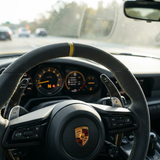
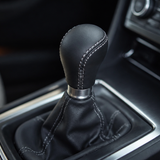
A custom-made cover changes the visual balance of the entire interior. If you choose a black stitched leather while the original steering wheel is in smooth leather patina, the contrast is seen immediately. The most profitable logic consists of treating the contact surfaces as a whole: seats, steering wheel, gear shift knob and central armrest share the same visual field and the same wear.
This is the reason why many motorists complete a cover installation with a matching steering wheel cover in leather, alcantara or carbon, and sometimes with a lumbar support cushion. Our guide on the choice of a headrest or lumbar cushion details the criteria to remember so as not to unbalance the ergonomics of the seat.
To go further on the preservation of materials, our complete interior maintenance guide (leather and carbon) covers all interior surfaces, and the car steering wheel catalog as well as the Volkswagen performance accessories universe group the most requested parts to harmonize an interior.
In-depth FAQ — custom and universal car seat covers
How do I know if my seat is equipped with a side airbag?
The most reliable marker is the "AIRBAG" marking screen-printed or sewn on the outer side of the backrest, door side. The vehicle user manual confirms the presence and the exact location of the module. In case of doubt about a particular trim, the product sheet reference and the VIN of the vehicle allow to clear the ambiguity before ordering.
Is a custom seat cover accepted at the technical inspection?
A cover does not constitute in itself a specific inspection point, but any element that would neutralize a safety device — side airbag, seat belt anchor, seat adjustment — poses a problem. A cover with the exact pattern, which leaves the release seam and the anchors perfectly clear, does not change anything about the original operation.
Can you install a custom cover on a heated or ventilated seat?
On a heated seat, the heat passes through the cover with a slight delay in heating up, without damage to the heating element. On a ventilated seat, however, a solid cover can significantly reduce the air flow through the original perforations: check on the product sheet that the reference provides a corresponding perforation before ordering.
Which seat cover to choose for a car with children and an Isofix car seat?
The priority is that the Isofix anchors remain accessible without deforming the cover. A custom pattern provides dedicated openings at the exact location of the anchors. A universal cover often forces to pass the fasteners over the fabric, which creates a permanent tension point and accelerates the wear of the concerned seam.
Leather or alcantara cover: which ages better?
Leather offers better resistance to repeated friction and cleans more easily, which makes it the most versatile choice for daily use. Alcantara brings superior grip and a more sporty touch, appreciated on the buckets, but requires more rigorous maintenance and marks more in the areas of intense contact. On a family vehicle, leather remains the safest compromise.
Should you order a cover per vehicle generation or by model?
Always by generation. An Audi A4 B8 and an A4 B9 carry the same commercial name but do not have the same seat geometry, just like a Golf 6 and a Golf 7. The generation code (B8, B9, 8V, MK7…) is the determining information to check on the registration card or the VIN before validating a custom cover order.
Can a seat cover damage the original upholstery it is supposed to protect?
Yes, in two cases: if the cover is placed on a dirty seat (the sand and gravel trapped act as an abrasive), or if it is stretched unevenly, which creates permanent pressure points on the foam. A prior cleaning and even tensioning of the straps eliminate these two risks.
How to clean a leather seat cover without damaging it?
A slightly damp microfiber cloth for regular dusting, then a neutral pH car leather cleaner followed by a nourishing milk every two to three months. Avoid household cleaners, solvents and prolonged exposure to direct sunlight, which dry out the leather grain and eventually cause irreversible cracks.
Cleaning a car seat cover: what goes in the machine and what does not

The most asked question after purchase is not about installation, it is about washing. Cleaning a car seat cover first requires knowing if it can be laid flat, and that is the first sorting to do: a cover with straps and hooks is removed in a few minutes, a custom cover slipped over a backrest with marked cheeks often requires removing the headrest and retensioning upon replacement.
The second sorting is about the material, and it is sharper than it seems. Fabric and sponge accept water; leather and synthetic leather (PU) only accept it on the surface, wiped immediately. It is this difference, and not the cover brand, that decides the entire maintenance protocol.
Washing a car seat cover in the machine is therefore never decided by judgment: it is read on the care label sewn in the lining. A fabric or sponge cover bearing a numbered tub symbol is generally washed at low temperature, inside out, without softener and without violent spinning; spinning is what deforms the elastics and the sewn corners, much more than the temperature itself.
Conversely, a leather or PU leather cover does not go in the machine, and no washing setting makes up for immersion: the textile support swells, the coating peels off in patches and the defect is definitive. On these materials, we stick to hand cleaning, barely damp microfiber cloth then neutral pH car cleaner.
Drying is the step everyone skimps on. A fabric cover passed through the dryer comes out shrunk by a few centimeters, which is enough to shift the seat belt openings and create permanent tension on the seams. Drying flat, in the shade, cover put right side up: it takes longer, and that is what preserves the cut.
A word on stains, because the answer depends on their nature. Grease and cosmetics are treated dry, by dabbing; coffee and sugary drinks are rinsed with clear water before any product; ink and denim dyes on light leather fall under a dedicated product and are tested first in a hidden corner. Rubbing hard is, in all three cases, the gesture that transforms a stain into a halo.
The useful frequency holds in one simple rule: a vacuum every two to three weeks, a complete cleaning two to four times a year depending on use, and a leather conditioner every two to three months. Our seat and steering wheel leather care guide details the products and gestures material by material.
Seat covers: the catalog references


Based on our own references, the approximate price range found in the catalog as of August 18, 2026, is as follows: multi-model PU leather covers range from €83.90 to €237.97 depending on the vehicle, and custom-fit leather sets for Audi and Volkswagen are priced at €475.90 (€356.90 for the entry-level Golf 6 GTI). These are dated prices and are subject to change: the product page today remains the only reference.
Car seat cover for dogs: protect the back seat without disabling an airbag

This is, by far, the most extensively researched area in the entire field: car seat cover for dogs and car seat protector for dogs each bring up about a dozen related queries, available in one-seat, two-seat, rigid, and trunk versions. The need is not aesthetic; it is very practical: hair, claws, moisture, and mud.
Three formats meet three distinct uses, and confusing them is the number one source of error. The single mat covers the seat of one seat and is sufficient for a small dog attached to a seat; the hammock stretches between the front and rear headrests and transforms the footwell into a basin that prevents falling out; the trunk protector, meanwhile, goes up the folded backrests and has nothing to do with a seat cover.
The material is chosen based on a single decisive criterion: resistance to claws. A thick coated polyester withstands the trampling of an adult dog where a thin fabric gives way at the first touch; the non-slip side, meanwhile, is what prevents the protector from moving at every turn. A PU leather cover designed for passengers is not designed for this use, and scratching is irreversible.
Next comes the safety point, and it is the same as for any other cover: a protector placed on a seat equipped with a side airbag can prevent its deployment. A stretched hammock covers precisely the sides of the backrests where the module is located on many vehicles — this is the most at-risk configuration of this entire article.
The rule we apply is strict and without exception: no reference is presented as airbag compatible if its page does not say so. As of August 18, 2026, only one page in our catalog documents compliance with the deployment zones, that of the custom-fit Audi Q8 cover. For everything else, the verification must be done before purchase, and our guide car seat cover and side airbag: what to check before buying describes exactly the checks to be carried out on your own car.
The harness deserves a separate sentence, because a seat protector is not a restraint device. It prevents dirt and limits sliding, it does not hold an animal in case of impact: restraint is a matter of a harness connected to a provided anchor point, or a secured transport box. On what an accessory really commits in terms of compliance, our guide to the approved tuning accessory poses the right questions to ask before buying.
Finally, the maintenance of a dog protector follows the opposite logic of leather: we look for washable. A dry brushing or a rubber glove removes the hair woven into the fabric much better than a vacuum cleaner, and the machine wash at low temperature is done with the cover turned inside out, without fabric softener, exactly as described above. If your interior budget is tight, our selection of interior tuning under 500 € shows where to put the money first.
Seat cover and heat: terry cloth, breathable fabric and burning seats in summer

The summer demand is a field in itself: car seat cover summer brings up about a dozen related queries, car seat cover terry cloth half a dozen, and the formulations "anti-heat", "anti-sweat" and "cooling" confirm themselves as autonomous pivots. The problem targeted is simple: a dark seat parked in the sun becomes uncomfortable to the touch, and sweat marks the material.
Terry cloth fabric meets this need with a physical property and not with a marketing effect: its loop absorbs moisture and breaks the direct contact between the skin and a hot surface. This is also what explains its disadvantage, known to all who have tried it: a terry cloth cover soaked with moisture takes a long time to dry in a closed interior, and ends up smelling if it is never removed.
The alternatives are divided into three families that are better not to confuse. The open-mesh breathable fabric creates a layer of air without absorbing anything; the wooden or bamboo bead cushion physically separates the back from the backrest; the active ventilated cushion blows air by means of a fan powered by the 12 V socket. Only the last one really cools, the first two merely — effectively — avoid the hot contact point.
One nuance is worth stating, because it is often circulated upside down: a cover does not lower the temperature of the interior. It changes the temperature of the surface you touch, which is already a lot after a stay in the sun, but the air in the car, it is treated with the sunshade, the cracking of the windows and parking in the shade.
Second point, often discovered too late: a solid cover placed on an original ventilated seat blocks the perforations through which the air is sucked or blown. On a vehicle equipped with this option, a non-perforated cover cancels the function you paid for — the exact opposite of the desired effect in summer. Our comparison Tesla Model 3 vs Model Y on the interior accessories side illustrates well this type of compromise on highly equipped interiors.
Color, finally, acts even before the material. A black upholstery exposed to the full south rises significantly higher in contact temperature than a beige or a light gray, and that is the reason why our custom sets are offered in four colors — black, white, beige and brown. Choosing light on a vehicle that sleeps outside is not an aesthetic whim, it is a comfort choice.
Seating comfort: cushions and supports


One last seasonal reflex: the summer cover is put away in the fall. Leaving a damp sponge in place all winter on a leather seat is creating a point of moisture retention against the most sensitive material of the interior, and the resulting trace is seen at resale.
Twelve questions about washing, transporting the dog and heat
These twelve questions complete the previous FAQ, which focused on the choice between custom-fit and universal. They deal with cleaning and removal, the protection of the back seat for a dog, and seating comfort in strong heat — that is, what happens once the cover is purchased.
Can you wash a car seat cover in the machine?
Only if the care label sewn into the lining authorizes it. Fabric and terry cloth covers generally go through a gentle cycle at low temperature, turned inside out, without fabric softener and with reduced spinning. Leather and synthetic leather covers never go in the machine: immersion permanently detaches the coating.
At what temperature to wash a fabric seat cover?
Follow the number carried by the tub symbol on the label. In the absence of indication, stick to a gentle cycle at low temperature: it is the violent spinning, more than the temperature, that deforms the elastic and the sewn corners.
Can you put a seat cover in the dryer?
No. Heat shrinks the elastic and the fabric by a few centimeters, which is enough to shift the seat belt openings and create permanent tension. Drying flat, in the shade, away from a radiator and out of direct sunlight.
How to remove a seat cover without damaging the seams?
Photograph the installation, first release the straps and the hooks under the seat, remove the headrest, then slide the cover up without pulling on an area still tight. It is by pulling on a cover under tension that you tear the corner seams.
How to remove dog hair from a seat cover?
A damp rubber glove or a soft-bristle brush passed in the direction of the weave removes woven hair much better than a vacuum cleaner, which only takes the top. We then vacuum, then wash if the material allows.
Which cover to choose for a dog: hammock, one-seat mat or trunk protector?
The hammock stretches between the front and rear headrests and prevents falling into the footwell: it is the most covering format for the back seat. The one-seat mat is sufficient for a small dog attached to a seat. The trunk protector goes up the folded backrests and does not protect the back seat in sitting position.
Can a dog protector interfere with a side airbag?
Yes, and it is the most at-risk configuration: a stretched hammock covers the sides of the backrests where the module is located on many vehicles. A cover placed on a seat with a side airbag can prevent its deployment. Check the AIRBAG label on the outer side of the backrest and only buy a covering protector if its page explicitly addresses the question.
Is a seat cover enough to attach a dog in the car?
No. A seat protector prevents dirt and limits sliding, it does not hold an animal in case of impact. Restraint is a matter of a harness connected to a provided anchor point, or a secured transport box.
Does a terry cloth cover really cool the seat?
It absorbs sweat and breaks the direct contact with a hot surface, which changes the immediate feeling. It does not lower the temperature of the interior: that is a matter of the sunshade, the cracking of the windows and parking in the shade.
Terry cloth, breathable fabric or 12 V ventilated cushion: what to choose in summer?
Terry cloth absorbs but dries slowly in a closed interior. The open-mesh breathable fabric creates a layer of air without retaining anything. Only the 12 V powered ventilated cushion really cools, at the cost of a permanent fan noise.
Can you place a cover on an original ventilated seat?
A solid cover blocks the perforations through which the air circulates and cancels the function. On a vehicle equipped with this option, check on the product page that the reference provides a corresponding perforation before ordering.
What color cover to choose for a car that parks outside?
A light color: a black surface exposed to the full south rises significantly higher in contact temperature than a beige or a light gray. Our custom sets are offered in black, white, beige and brown, which leaves the choice without sacrificing the coherence of the interior.
What to remember before ordering
The choice between custom-fit and universal is not reduced to a budgetary compromise. It depends first on a non-negotiable safety point — compatibility with the side airbag —, then on your horizon of conservation of the vehicle, finally on the type of seat equipping your car. Systematically check the exact generation of your model before ordering, check the alignment of the airbag zone after installation, and treat the interior as a coherent whole rather than a sum of isolated accessories.
Recevez nos prochains guides en avant-première
Tutos pose, comparatifs aftermarket vs origine, sélection M Performance/AMG/RS, codes promos exclusifs.