Used Jeep Wrangler: Our Complete Reliability Guide
The used Jeep Wrangler is one of the few 4x4s whose value refuses to collapse: with more than 8,100 searches per month in France, it is the most coveted off-roader on the second-hand market, and also one of the most poorly bought.
Between a 2004 TJ at €9,000, a JK 2.8 CRD at €17,000, and a JL 2.0 GME at €38,000, there is not one Wrangler but four different cars, with four different lists of faults. This guide reviews the generations, the engines, the famous death wobble, roof sealing, US imports, and actual prices by budget bracket.
The essentials in 8 points
- TJ (1997-2006): the most basic, the easiest to repair, the most expensive to run. From €8,000 in decent condition, with no real bargains under €5,000.
- JK (2007-2018): the best value for money today. The 2.8 CRD remains the rational choice, the 3.6 Pentastar the choice for pleasure.
- JL (2018-): transformed perceived quality, but an entry budget around €32,000 and heavy taxation on recent registrations.
- The death wobble is not a mechanical inevitability: it is almost always caused by wear on a coupling rod, steering damper, or control arm bushings.
- Soft top or hardtop: leaks and wind noise are the main sources of regret. Test the car at a high-pressure car wash before buying.
- A Wrangler actually consumes 9 to 14 L/100 km depending on the engine. Fuel is the main expense, far ahead of parts.
- The US import remains attractive for the large petrol V6s, provided you anticipate homologation, VAT, and customs duties.
- A well-maintained Wrangler hardly depreciates anymore after 8 years: it is as much an investment purchase as a pleasure purchase.
The used Jeep Wrangler in 2026: what the myth is really worth
The Wrangler is the direct descendant of the 1941 Willys, and it is the only mass-market 4x4 sold today that retains a ladder frame, two solid axles, and a mechanical transfer case. This architecture, abandoned by almost all competitors, explains both its exceptional off-road qualities and its on-road shortcomings.
On the French used market, this uniqueness produces a rare phenomenon: the Wrangler depreciates very slowly. A 2012 JK bought new for €32,000 can still be traded for around €19,000 to €22,000 depending on the version. No other car in this category holds such figures after fourteen years.
The corollary is that there are practically no more cheap Wranglers. Listings under €8,000 concern high-mileage TJs, often modified, sometimes imported without history. A buyer looking for a "cheap used wrangler" must understand that the realistic entry price is between €9,000 and €12,000 for a healthy car.
A market split in two
On one side, the used Wranglers: Sahara or Sport versions, hardtop, automatic gearbox, average mileage, used as a main car. They sell quickly, at stable prices, and represent the majority of the volume.
On the other, the modified Wranglers: lifted suspension, 33 or 35-inch tires, winch, snorkel. Their value depends entirely on the quality of the modification and its traceability. A properly done modification can add value to the car; a makeshift modification severely depreciates it, because it promises re-compliance costs.
A third, more discreet market also exists: that of Wranglers imported from the United States. They often show flattering mileage and superior equipment, but their maintenance history is difficult to reconstruct and their homologation requires work. We devote a complete section to this below.
The reflex that changes everything: even before you go, run the plate on the public service Histovec service. It provides the administrative history for free, changes of ownership, any procedures for damaged vehicles, and the mileage recorded at technical inspections. On an imported or modified Wrangler, it is the first line of defense.
TJ, JK, JL: which generation for which budget?
Three generations are actually in circulation in France. The 1990s YJ, with its square headlights, has become a collector's item whose market no longer concerns the ordinary buyer. Let's focus on the other three.
TJ (1997-2006): the last true basic
The TJ brings back round headlights and adopts coil spring suspension instead of the YJ's leaf springs, which significantly improves comfort without sacrificing any capabilities. It remains the easiest Wrangler to repair: everything is accessible, everything is removable, spare parts are abundant.
Its weaknesses are age and corrosion. The rocker panels, rear wheel arches, and frame crossmembers are the critical areas. A French TJ that has spent twenty winters on salted roads can be structurally condemned even if the mechanics run perfectly.
The Unlimited version (LJ, 2004-2006), extended by 25 centimeters, is today the most sought-after and most expensive: count on €18,000 to €26,000 for a healthy example, which is more than a newer JK. It is the only Wrangler whose value has genuinely gone up in the last five years.
JK (2007-2018): the balance point
The JK marks the real break. It introduces the four-door Unlimited bodywork, which today represents the overwhelming majority of used sales, and gains in habitability, soundproofing, and passive safety.
It is the generation that offers the best compromise in 2026: modern enough for daily use, old enough to be affordable, and widespread enough that parts are easy to find. A 2013 JK Unlimited 2.8 CRD in good condition trades between €21,000 and €27,000.
Pay attention, however, to the model year. The JK models produced from 2007 to 2011 receive the old 3.8 EGH V6, sluggish and thirsty, and an unattractive hard plastic dashboard. The 2012 facelift brings the 3.6 Pentastar and a significantly superior interior: for the same budget, always aim for a model year after 2012.
JL (2018-): comfort at last
The JL retains the separate frame architecture but modernizes everything else: aluminum on the opening parts, simplified folding windshield, modern multimedia screen, driving aids. On the road, the comfort gap with a JK is considerable.
On the French market, the JL suffers from a tax problem. The recently approved 2.0 GME petrol versions bear a heavy tax that has driven up new prices, which mechanically pulls the used price up. Under €32,000, you find practically nothing serious.
| Generation | Years | Engines seen in France | Realistic budget | For whom |
|---|---|---|---|---|
| TJ / LJ | 1997-2006 | 2.4 petrol, 4.0 petrol, 2.5 CRD | 9,000 – 26,000 € | DIYer, leisure use, pure off-road |
| JK phase 1 | 2007-2011 | 3.8 V6, 2.8 CRD 177 hp | 14,000 – 20,000 € | Small budget four-door |
| JK phase 2 | 2012-2018 | 3.6 Pentastar, 2.8 CRD 200 hp | 20,000 – 32,000 € | The best overall compromise |
| JL | 2018 and later | 2.0 GME, 2.2 MultiJet, plug-in hybrid | 32,000 – 60,000 € | Daily use, comfort, warranty |
To remember: if you hesitate between the three, the JK phase 2 Unlimited 2.8 CRD is statistically the safest answer. It combines four doors, economical diesel, the restyled interior, and a depreciation that is already largely amortized.
The engines in detail: 2.8 CRD, 3.6 Pentastar, 2.0 GME
The 2.8 CRD: the pragmatic
This Italian-made four-cylinder diesel equips the JK in two power states: 177 hp before 2011, then 200 hp and 460 Nm after. It is the best-selling engine in Europe, and by far the most rational for daily use.
Its actual consumption hovers around 9 to 10 L/100 km in mixed use, compared to 13 to 15 for a petrol V6. On 15,000 km per year, the difference represents about €900 per year. It is this figure that explains the systematic price premium of the diesel versions in listings.
Its weaknesses are known and documented. The particle filter clogs on short trips, the EGR valve gets dirty, and the injectors start showing signs of fatigue around 180,000 km. The most expensive point remains the cylinder head on examples that have suffered repeated overheating, especially those used for heavy towing.
The timing belt is replaced every 120,000 km or 6 years. It is an intervention costing around €900 to €1,200 parts and labor included. Demand the invoice: on a belt-driven engine, an untracked timing belt is a five-thousand-euro risk.
The 3.6 Pentastar: the unapologetic pleasure
This 284 hp petrol V6, introduced in 2012, transforms the character of the Wrangler. Smooth, quiet at low revs, frankly noisy above 4,000 rpm, it makes the car pleasant where the 3.8 was simply painful.
Its reliability reputation is good, with one exception: the cylinder heads of the 2011 to 2013 model years had a defect on the valve guides on one side of the block, causing a misfire on one cylinder. The symptom is a flashing engine light and an irregular cold idle. The manufacturer had extended its warranty on this point at the time; check if the repair was done.
Another point of vigilance: the tensioner pulley and the water pump, which are part of the routine maintenance around 120,000 km. The Pentastar uses a timing chain that does not require scheduled replacement, which more than compensates for the fuel cost.
The 2.0 GME turbo: the still-debated modern
On the JL, this 272 hp turbo petrol four-cylinder embraces modernity: direct injection, mild hybridization on certain versions, and a flattering official consumption. In reality, count on 10.5 to 12 L/100 km, which remains high but lower than the Pentastar.
There is still not enough hindsight for a definitive verdict, but two trends are emerging: the fouling of the intake valves, classic on direct injection, and a sensitivity to poor-quality oils that affects the turbo. Strictly follow the oil change intervals at 12,000 km or 12 months, never beyond.
And the 2.2 MultiJet
The JL diesel, at 200 hp, uses a well-known base. It is quieter and more economical than the 2.8 CRD, but imposes an AdBlue system whose tank and injector can cause problems on low-mileage cars. An AdBlue fault immobilizes the car after a countdown: do not neglect it during the test drive.
Automatic or manual gearbox: the real match
The question comes up in almost every search, and the answer depends less on taste than on the actual use you will make of the car.
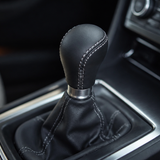
The six-speed manual gearbox mainly equips the TJ and the entry-level JK. It is mechanically simple, repairable, and allows for very precise dosing in slow crawling. Its flaw is comfort: the clutch is heavy, the lever throw is long, and in traffic jams the Wrangler becomes a physical chore.
The automatic gearbox evolves with the generations. The JK receives a five-speed automatic until 2011, then an eight-speed transmission from 2012 on certain versions and systematically on the JL. The comfort gap between the two is huge, and it is felt from the first kilometer.
This eight-speed gearbox enjoys a very good reputation, provided you do not believe the lifetime fill discourse. A gearbox oil change every 80,000 to 100,000 km with the specified oil spectacularly extends its lifespan. On a used Wrangler, the absence of a gearbox oil change at 150,000 km is a perfectly legitimate negotiation point.
The test that betrays a tired gearbox: engine hot, at a stop, brake depressed, shift from D to R while listening. A dull "clack" and a delay of more than one second signal wear on the internal clutch plates. On the road, a rev increase without corresponding acceleration betrays a torque converter slip.
For pure off-roading, the manual retains an advantage on incline crossings where the engine must remain strictly at the chosen revs. For everything else, and especially for resale, the automatic sells better and faster. If your Wrangler is to serve as a main car, stop looking.
One detail that counts: the transfer case. The Wrangler offers a 2.72:1 reduction on the Sport and Sahara versions, and a 4.00:1 reduction on the Rubicon. The latter completely changes the behavior in slow crawling, and justifies by itself part of the Rubicon surcharge. If you never go off-road, it will bring you nothing.
On the question of transmissions, our dossier dedicated to modern automatic gearboxes details the good maintenance reflexes that apply to all brands, including Jeep.
The "death wobble": understanding and diagnosing the front axle oscillation
It is the most searched topic of the Wrangler, and the worst explained. The death wobble refers to a violent and self-sustaining oscillation of the front axle, which generally appears between 70 and 90 km/h after passing over a bump or a road joint. The steering wheel starts beating rapidly, the car seems uncontrollable, and the only solution is to slow down sharply.
The first thing to know: it is not a fatal design flaw. It is a resonance phenomenon specific to solid axles with a Panhard rod, which the wear of a single component is enough to trigger. Once the faulty part is replaced, the phenomenon disappears completely.
The six real causes, in order of frequency
- Worn coupling rod and steering tie rod ends: by far the number one cause. A play of a few tenths of a millimeter is enough.
- Dead steering damper: it does not cause the phenomenon but it dampens it. A failed damper transforms a slight tremble into a major oscillation.
- Control arm bushings torn or cracked, especially the lower front arms.
- Panhard rod: worn ball joint or bushing, or cracked frame mount. It is the most often neglected point.
- Imbalanced wheels or deformed tires, especially after fitting large off-road tires that haven't been dynamically balanced.
- Wheel bearings with play, or insufficiently tightened hub nuts.
The lift kit trap: a poorly designed suspension kit alters the angles of the Panhard bar and the steering linkage. As a result, a perfectly healthy Wrangler before modification starts to wobble after. If the seller advertises a lift kit, ask if a adjustable Panhard bar and a geometry correction were included in the installation. If not, budget for them.
The fifteen-minute diagnosis
Car on a lift or on jack stands, front wheels off the ground: grab each wheel at 9 and 3 o'clock and shake it horizontally. A clunk indicates steering play. Try again at 6 and 12 o'clock: vertical play points to a bearing or pivot ball joint.
Next, ask someone to turn the steering wheel a quarter turn to the left and then to the right while you watch the steering rack. Any parasitic movement at the ball joints is a dealbreaker. Finally, visually inspect the bushings: they must be solid, without cracks or peeling rubber.
Key takeaway: a complete front-end overhaul costs between €600 and €1,400 depending on the parts that need replacing. If a seller describes an oscillation, it's not necessarily a dealbreaker, but it is a quantifiable negotiation point, not a vague concern.
Removable roof, sealing and noise: the real daily experience
The Wrangler is the only 4x4 where you can remove the roof and doors and fold down the windshield. This is a huge part of its charm and, on the used market, the leading cause of disappointment.
Soft top: freedom and compromise
The fabric top is light, folds quickly, and is relatively inexpensive to replace. However, it ages poorly: the zippers seize up, the plastic window yellows and cracks, and the side seals harden. After seven or eight years, an original top usually needs replacing.
Budget €700 to €1,400 for a decent-quality top, installation included. On a €15,000 car, that's almost 10% of the price: check its condition carefully and negotiate accordingly.
Noise is the other issue. At 130 km/h, a Wrangler with a soft top requires you to speak loudly. This isn't a defect; it's a characteristic. If you do a lot of highway driving, opt for a hardtop without hesitation.
Hardtop: the sensible version
The three-piece hardtop, often called the Freedom Top, allows you to remove only the two front panels while keeping the rear glass and heated section. It's the best compromise, and it's what most buyers are looking for.
The points to check are the sealing gaskets along the windshield and pillars, as well as the mounting screws that corrode. A leak first manifests as damp carpeting at the rear footwells, then as a persistent smell.
The test you absolutely must do: ask the seller to take the car through a high-pressure wash while you are inside with the doors closed. Look for drips along the windshield pillars, above the rear doors, and at the hardtop junction. Five minutes of testing can save you three years of damp carpeting and hidden corrosion under the mats.
Also check that the removable front panels are present and not cracked, and that the original storage bag exists. A single panel is difficult and expensive to replace.
Doors and windshield
Driving with the doors removed is legal in France only if the vehicle remains compliant with its original approval: this requires homologated mirrors mounted on the hinges. Without a left exterior mirror, you are breaking the law. The vehicle compliance rules are explained on service-public.fr.
The fold-down windshield, however, must never be used on public roads. It's a military legacy reserved for private land.
Known faults, part by part
Corrosion and chassis
This is the number one issue on the TJ and JK. The ladder chassis is factory-protected, but the rear crossmembers, suspension arm mounts, and ends near the shock absorbers take the brunt of salt, mud, and road spray. Perforating corrosion on a suspension arm mount is a major repair requiring structural welding.
Always put your hand under the vehicle. Superficial light brown rust is normal; layered rust that flakes off in sheets and leaves a gap when probed with a screwdriver is a dealbreaker.
Axles and drivetrain
Dana axles are robust but require an oil change every 60,000 km, and absolutely after every deep wading. Axle oil that has emulsified with water takes on a café au lait appearance: open the fill cap and look.
On Rubicons, the electric differential lockers can fail, often because the wiring harness passes near the axle and gets cut. Test the engagement of both lockers while stationary, in low range.
Electrical and electronics
The intelligent power distribution module is a known weak point of the JK. Symptoms range from the windshield wipers turning on by themselves to the fuel pump remaining powered with the engine off. A complete replacement costs €700 to €1,100.
The power windows and door switches also suffer, especially on cars that are often driven with the doors or top open: moisture seeps into the connectors. Test each control one by one.
Braking and steering
The weight and aerodynamics of the Wrangler strain the brakes. Budget for front discs and pads every 50,000 to 60,000 km in mixed use, and more often if you tow. The ball steering rack develops play at the center point with age: half a turn of the steering wheel without any response is excessive and can often be corrected with a simple adjustment.
Interior
The plastics of the early JK scratch and turn white. The fabric seats retain moisture if the car has been driven with the top down in the rain. Check under the mats for signs of oxidation on the floors, especially around the drain plugs that Jeep provides precisely to drain water.
| Component | Symptom | Typical mileage | Estimated cost |
|---|---|---|---|
| Complete front end | Oscillation, shaking steering wheel | 90,000 – 150,000 km | 600 – 1,400 € |
| 2.8 CRD timing belt | Mandatory preventive maintenance | 120,000 km or 6 years | 900 – 1,200 € |
| Particulate filter | Warning light, power loss | 140,000 km and more | 800 – 1,600 € |
| Main electrical module | Erratic functions | Random | 700 – 1,100 € |
| Soft top | Leaks, seized fasteners | 7 – 9 years | 700 – 1,400 € |
| Manual clutch | Slipping when hot | 140,000 – 190,000 km | 1,100 – 1,600 € |
| 2011-2013 Pentastar cylinder head | Flashing warning light, misfire | 60,000 – 120,000 km | 1,500 – 2,600 € |
Critical mileages: the roadmap
A Wrangler doesn't break down at random. Expenses come in stages, and knowing these stages helps you determine whether the asking price includes the upcoming costs.
Before 60,000 km
Nothing special beyond routine maintenance: annual oil change, filters, brake pads. This is the most carefree zone, but also the most expensive at purchase. On the JL, the manufacturer's warranty may still be in effect.
From 60,000 to 120,000 km
The first real stage. This includes axle oil changes, the first set of discs and pads, often the battery, and sometimes the shock absorbers. On the 2.8 CRD, this is the window for the timing belt. Realistic cumulative budget: 1,500 to 2,500 €.
From 120,000 to 180,000 km
The decisive zone. The front end starts to need attention, the EGR valve and the particulate filter remind diesel owners of their presence, and the clutch reaches the end of its life on manual models. This is also the right time to change the automatic transmission oil.
A Wrangler listed at 145,000 km without any of these interventions is not a good deal: it's a deferred bill of 3,000 €. Conversely, a model with 190,000 km and all these items invoiced can be an excellent purchase.
Beyond 200,000 km
The Wrangler reaches this easily, provided the chassis is sound. At this stage, the mechanics matter less than the structure: an engine can be rebuilt, but a perforated chassis condemns the car. Focus the inspection on the bodywork and chassis rails.
Real budget: maintenance, fuel, insurance
The purchase price is only half the story. Here is what a Wrangler really costs over twelve months, for 15,000 km per year.
| Item | JK 2.8 CRD | JK 3.6 Pentastar | JL 2.0 GME |
|---|---|---|---|
| Fuel | ≈ 2,300 € | ≈ 3,400 € | ≈ 2,900 € |
| Routine maintenance | 550 € | 450 € | 500 € |
| Repair provision | 800 € | 600 € | 500 € |
| Tires (amortized) | 350 € | 350 € | 380 € |
| Comprehensive insurance | 750 € | 800 € | 950 € |
| Annual total | ≈ 4,750 € | ≈ 5,600 € | ≈ 5,230 € |
Two remarks. First, fuel costs outweigh everything else: it is fuel, not breakdowns, that makes the difference between the engines. Next, Wrangler insurance is often higher than expected because insurers classify it as a 4x4 and fear the theft of the roof panels.
Add the cost of off-road tires if you opt for 33-inch tires: a full set easily costs 1,100 € and wears out faster on asphalt. It's a style choice that comes at a price.
What really hurts the wallet
The most frequent unexpected expenses are, in order: front-end overhaul, top replacement, particulate filter, and electrical module. Budget €1,500 for the first year for a Wrangler over ten years old, even if it looks impeccable.
Valuation and real prices: what can you find for 5,000, 10,000, and 15,000 €?
French searches are explicit: "used wrangler 5000 euros", "used wrangler 10000 euros", "used wrangler 15000 euros". Here is the reality behind each bracket.
Around 5,000 €
At this level, you are not buying a car, you are buying a project. It is a TJ 2.4 petrol or 2.5 CRD with over 250,000 km, often with a chassis that needs work, a worn interior, and a unusable top. Some are former agricultural vehicles.
It is doable if you can weld, if you have a garage, and if the purchase price leaves you with 4,000 € for work. Otherwise, keep walking: this bracket produces the overwhelming majority of bad experiences.
Around 10,000 €
The bracket for a decent TJ or a high-mileage early JK. A 2003 TJ 4.0 petrol with 180,000 km, a sound chassis, and a hardtop present, can be found at this price and makes a very good pleasure purchase for weekend use.
A 2008 JK 2.8 CRD with 240,000 km also falls into this range, but with the timing belt and front end to be budgeted for. Add it up before you decide.
Around 15,000 €
This is the most contested bracket. You can find early JK Unlimited 2.8 CRD models with between 160,000 and 210,000 km, or carefully maintained TJ Unlimiteds. The choice is real, and so is the competition among buyers: good listings sell within forty-eight hours.
At this level, demand the service book, timing belt invoices, and a front-end inspection. A JK at 15,000 € with these three elements is worth more than a JK at 13,500 € without history.
Beyond 20,000 €
You gain access to the early JK models, with the Pentastar or 200 hp CRD, the restyled interior, and reasonable mileages. This is the best place to put your money if it is for daily use. Beyond 32,000 €, you enter the JL market.
| Budget | What you find | Typical mileage | Risk |
|---|---|---|---|
| 5,000 € | Worn TJ, restoration project | 250,000 km and more | High |
| 10,000 € | Sound TJ or high-mileage early JK | 180,000 – 250,000 km | Medium |
| 15,000 € | JK Unlimited 2.8 CRD | 160,000 – 210,000 km | Managed |
| 22,000 € | Early JK, two or four-door | 110,000 – 160,000 km | Low |
| 35,000 € | Recent JL, warranty possible | 40,000 – 90,000 km | Very low |
Three-door or five-door?
The question of the "three-door Wrangler" versus the "two-door Wrangler" comes up often, and it is based on a confusion: the short Wrangler is a two-door with a tailgate, sometimes advertised as three-door. The long is a four-door Unlimited, advertised as five-door.
The short is more maneuverable, more typical, and costs about 15% less with equal equipment. The long is infinitely more livable for families and resells better. If you hesitate, the Unlimited is the sensible choice.
Import from the United States and French approval
American Wranglers attract because they are numerous, often better equipped, and sometimes cheaper. The process is perfectly legal, but it requires method.
The real steps
- Purchase and maritime transport: budget 1,400 to 2,200 € for freight and insurance depending on the port of arrival.
- Customs clearance: 10% customs duties on the value, then 20% VAT on the total value plus duties plus transport. This is the item that surprises the most.
- Certificate of conformity: since an American Wrangler has no European approval, you must go through an isolated approval with the DREAL.
- Standardization: position lights, orange turn signals, rear fog light, license plate lighting, sometimes mirrors. Budget 400 to 900 €.
- Technical inspection then registration via the official online service.
The honest calculation: a Wrangler listed at 18,000 dollars in the United States costs, once on the road in France, around 28,000 to 31,000 € all costs included. Import only makes sense for rare or very well equipped versions, never for a common model that you will already find approved in France.
Also pay attention to American vehicles with a title mentioning a total loss. These entries are not automatically translated into the French system, creating cars with an invisible history. Always demand the original title and have it translated.
Finally, an American Wrangler often comes with a mileage counter in miles. Converting it to kilometers is not mandatory, but it is highly recommended for resale, and it must be documented.
Test drive checklist: the 25 points to check
Take this list with you. A serious seller will let you check everything; a rushed seller will tell you a lot with their impatience.
Structure and bodywork
- Rear chassis crossmembers: probe with a screwdriver, not just your eyes.
- Suspension arm mounts: look for cracks and recent welds.
- Sills and rear wheel arches.
- Floor under the mats, around the drain plugs.
- Door gaps and hood alignment: telltale signs of a collision.
- Condition of the removable roof panels and presence of the storage bag.
- Soft top: fasteners, rear window, seals.
Mechanical
- Engine oil: level, color, absence of emulsion under the cap.
- Coolant: clear color, no greasy residue.
- Front and rear differential oil: open, smell, look.
- Cold start: listen during the first thirty seconds.
- Exhaust smoke after accelerating on a hill.
- 2.8 CRD timing belt: invoice mandatory.
- Accessory belt and pulley noises.
- Automatic transmission fluid change: invoice or negotiation.
Running gear and steering
- Front wheel play at 9 o'clock - 3 o'clock, then 6 o'clock - 12 o'clock.
- Steering damper: leak, pitted body.
- Control arm bushings: visible cracks.
- Panhard bar and its mounting to the chassis.
- Uneven tire wear, an indicator of faulty geometry.
- Test drive at 80 km/h on degraded road surfaces to provoke any potential oscillation.
Equipment and electronics
- Engagement of the 4H and 4L ranges, at a stop and then while moving slowly.
- Differential locks on the Rubicon.
- All electrical controls one by one.
- Fault reading with a diagnostic tool before purchase, including recently cleared stored faults.
To remember: if you had to remember only three points, they would be the chassis, the timing belt invoice, and the front end play. They alone determine more than 80% of the financial risk.
Versions to favor, versions to avoid
The safe bets
JK Unlimited 2.8 CRD 200 hp, model years 2013 to 2017, automatic transmission, hard top. This is the most balanced combination on the market: four doors, manageable fuel consumption, restyled interior, easy resale. If you only have one line to remember, it's this one.
TJ 4.0 gasoline, manual transmission, healthy chassis. For leisure and off-road use, this six-cylinder engine is indestructible and the entire car can be repaired with a set of wrenches. Fuel consumption, around 13 l/100 km, makes it a poor choice for daily driving.
JL 2.2 MultiJet Sahara. If your budget exceeds €38,000, this is the most civilized Wrangler ever produced, with reasonable fuel consumption and complete equipment.
The versions to examine twice
JK 3.8 EGH (2007-2011). Sluggish, thirsty, and its interior has aged poorly. It is only justified if the price is significantly below market value.
Any heavily modified Wrangler without an invoice. A lift of more than two inches without geometry correction, 35-inch tires without speedometer reprogramming, an original axle under increased power: these are promises of expenses.
Examples that have driven a lot near the sea. Salt air attacks the hard top fasteners and electrical ground points. Look under the car before looking at the bodywork.
The Rubicon case
The Rubicon brings front and rear lockers, the 4,000:1 transfer case, the disconnectable sway bar, and reinforced axles. It is a real off-road tool, and it costs about €4,000 to €6,000 more than an equivalent Sahara.
If you never leave the asphalt, this extra cost will bring you nothing in usage, but it is fully recovered at resale. It is therefore a neutral investment rather than an expense.
Compared to rivals, and final verdict
| Model | Advantage over the Wrangler | Weakness | Used budget |
|---|---|---|---|
| Suzuki Jimny | Usage cost divided by three, ideal size in the forest | Two seats on recent versions, painful on the highway | 12,000 – 24,000 € |
| Toyota Land Cruiser | Benchmark mechanical reliability, superior comfort | Bulky, high entry price | 18,000 – 45,000 € |
| Old Land Rover Defender | Equivalent charisma, load capacity | Non-existent comfort, corrosion, frequent maintenance | 20,000 – 40,000 € |
| Jeep Renegade Trailhawk | Urban use, fuel consumption, price | No solid axles, much lower capabilities | 11,000 – 22,000 € |
Compared to the Jimny, the Wrangler wins in habitability, towing capacity, and highway comfort; it loses on all costs. We detail this alternative in our used Suzuki Jimny reliability guide.
If your need is an SUV rather than an off-roader, look instead at used German large SUVs or the Jeep Renegade, which is more urban and much cheaper to use.
The verdict
The used Jeep Wrangler is an excellent purchase for those who know what they are buying: a body-on-frame vehicle, designed for off-road use, whose every road flaw is the direct counterpart of an off-road quality. It is never a bad rational choice as long as you do not ask it to be a sedan.
Our recommendation remains the JK phase 2 Unlimited 2.8 CRD automatic with hard top, between 22,000 and 27,000 €, with a checked chassis and timing belt done. This is where the ratio of pleasure, usage, and residual value reaches its maximum.
Avoid €5,000 projects, beware of modifications without an invoice, and systematically spend €200 on an independent inspection before signing. It is the most profitable investment of the entire process. As a reminder, the safety rules related to vehicle modifications are detailed on the Road Safety website.
Personalizing your Wrangler: where to start
Once the car is purchased, the Wrangler is probably the most enjoyable 4x4 to personalize, because every element is bolted on rather than glued. Here are four accessories that we see coming back most often on our customers' Jeeps.
 Jeep 63 mm floating LED hub cap99.90 €
 Wireless LED Jeep door sills89.90 €
 Jeep 15 W wireless charger phone holder69.90 €
 Jeep 7-color LED cup holder21.90 €
On a rugged vehicle, the most useful accessory remains the running board: it facilitates access to a high car and protects the sills from projections. Our Jeep running boards and our Jeep roof bars cover the most common uses.
In terms of style, the Jeep grille and the Jeep LED headlights are the two pieces that transform a Wrangler most visibly, while the Jeep LED taillights modernize the nighttime signature. The whole is grouped in our Jeep performance accessories section.
Frequently asked questions about the used Jeep Wrangler
What is the minimum budget for a reliable used Jeep Wrangler?
Count 9,000 to 12,000 € for a healthy TJ, and about 15,000 € for a diesel JK Unlimited with a decent history. Below 8,000 €, you are buying a restoration project, not a road-ready car.
Is the Jeep Wrangler reliable?
Mechanically yes, provided you follow the maintenance. Its weaknesses are known and localized: front end, chassis corrosion, roof sealing, and on diesel, the particulate filter. None of these breakdowns are unpredictable, which allows them to be budgeted.
Which engine to choose between the 2.8 CRD and the 3.6 Pentastar?
The 2.8 CRD if you drive more than 12,000 km per year: the fuel difference reaches 900 € annually. The 3.6 Pentastar if you drive little and are looking for enjoyment, because it requires less preventive maintenance and does not have a timing belt.
What is the death wobble and should you be afraid of it?
It is an oscillation of the front end that appears around 80 km/h after a bump. It almost always comes from a worn ball joint, a dead steering damper, or a tired bushing. The repair costs between 600 and 1,400 €, and the phenomenon then disappears permanently.
Can you use a Wrangler as a single daily car?
Yes, by choosing an four-door Unlimited, in diesel, with hard top and automatic transmission. In the short soft top and manual transmission version, daily use quickly becomes tiring: noise, consumption, and suspension comfort.
What real consumption to expect?
About 9 to 10 l/100 km for the 2.8 CRD, 13 to 15 l for the 3.6 Pentastar, 10.5 to 12 l for the 2.0 GME. Off-road tires and a lift easily add an extra liter.
Is it better to buy a diesel or gasoline Wrangler?
Diesel dominates on usage cost and resale in France. Gasoline has better enjoyment and fewer expensive parts to replace. Beyond 12,000 km per year, the diesel remains financially unbeatable.
Should you fear a Wrangler imported from the United States?
No, provided you demand the original title, check the absence of a total loss mention, and have the isolated title registration done correctly. Once registered in France, the total cost often exceeds that of an already homologated example.
Does a lifted Wrangler pass the technical inspection?
Only if the modification is declared and the vehicle remains compliant with its registration. An unapproved lift, tires protruding from the fenders, or modified lights lead to a re-inspection. Always ask for the registration card mentioning the modifications.
How much does a new soft top cost?
Between 700 and 1,400 € including installation for a good quality soft top. On a car over eight years old, consider that this expense is coming in the short term and include it in your purchase offer.
Is the two-door Wrangler a good choice?
It is more typical, more maneuverable off-road, and about 15% cheaper. But its trunk is tiny and its rear bench is barely usable. For family use or to maximize resale, the four-door Unlimited is the obvious choice.
What mileage is acceptable on a Wrangler?
A Wrangler easily exceeds 250,000 km if the chassis is healthy. Mileage matters less than the maintenance history and the condition of the structure: always prefer an example at 190,000 km with invoices to an example at 130,000 km without any justification.
Your Wrangler deserves better than the original finish
Running boards, grilles, roof bars, LED lighting: everything you need to transform your Jeep, with shipping from France.
See Jeep accessories Jeep running boardsOne last piece of advice: before personalizing, drive the car as is for three months. You will then know exactly what you are missing, and you will avoid buying parts that you will resell. To choose parts that last, our guide on real carbon and its imitations avoids bad surprises, and our grille buying guide explains how to check a mounting before ordering.
Frequent searches: used jeep wrangler · cheap used wrangler · used jeep wrangler 15000 euros · used jeep wrangler 10000 euros · used jeep wrangler price · used jeep wrangler 5000 euros · used diesel jeep wrangler · used jeep wrangler 4x4 · used 3 door jeep wrangler · used 2 door jeep wrangler · usa imported jeep wrangler · used jeep wrangler unlimited · used jeep wrangler jk · used jeep wrangler tj · death wobble jeep wrangler
Recevez nos prochains guides en avant-première
Tutos pose, comparatifs aftermarket vs origine, sélection M Performance/AMG/RS, codes promos exclusifs.