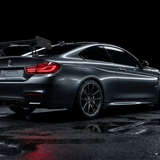
Used BMW M3 G80 / M4 G82: Our Complete Reliability Guide
Are you looking for a used BMW M3 G80 or a used M4 G82 and want to know if the six-cylinder S58 lives up to its reliability promises? You've come to the right place. This guide scrutinizes the G80/G82 generation (and the M3 Touring G81 estate): engine, manual gearbox or ZF8, M xDrive transmission, known failures component by component, critical mileages, actual maintenance budget, value on the French market, and points to check during a test drive. Objective: buy the right used BMW M3 G80, at the right price, without any unpleasant surprises.
⚡ TL;DR — the essentials in 30 seconds
- The 3.0-liter biturbo S58 (480 to 550 hp) is currently one of the most robust M engines: no fragile crankshaft hub like on the F80's S55.
- ZF8 gearbox virtually indestructible if serviced every 60,000 to 80,000 km; the manual (480 hp only) is rarer and already a collector's item.
- M xDrive available since late 2021 on the Competition model: heavier, but the transmission is sound if the transfer case oil is properly maintained.
- Points of concern: wheels and tires (high cost), prohibitively expensive carbon-ceramic brakes to replace, minor iDrive electronic glitches, 12V battery drain.
- Budget: allow €70,000 to €85,000 for a 2021-2022 Competition, €2,500 to €4,000/year for maintenance, tires, and brakes in pleasure use.
- Verdict: reliability 8.5/10 — one of the most worry-free used M cars to buy, provided you insist on a 100% BMW or specialist service history.
Table of Contents
- History and versions: G80, G82, G81 Touring, Competition, CS, CSL
- The S58 engine in detail: a pleasant surprise
- Manual gearbox or ZF8: which one to choose used?
- M xDrive: an asset or an additional risk?
- Known failures component by component
- Critical mileages and service intervals
- Maintenance budget and parts prices
- Value and actual prices on the used market
- Long-term reliability: what do S58s at 100,000 km say?
- The points to absolutely check during a test drive
- Where to buy: dealership, specialist, private seller, or import?
- Options and configurations that add value
- History and documents to demand before signing
- Versions and model years to favor or avoid
- F80 vs G80 comparison: which one to buy?
- Touring G81, CS, and CSL: the special cases
- Insurance, penalties, and additional costs
- FAQ: your 12 most frequent questions
- M3 G80 or M4 G82: which one to choose used?
- Preparation and customization without voiding the warranty
- Actual costs over 3 years: numerical simulation
- Final verdict
History and versions: a generation that divided, then convinced
Unveiled in September 2020 and marketed from early 2021, the M3 G80 (sedan) and the M4 G82 (coupe) initially made headlines for their massive vertical grilles. Five years later, the aesthetic debate has calmed down and an obvious truth has emerged: it is one of the most technically advanced M generations.
The range was built in stages. In 2021, the "base" M3/M4 offers 480 hp, rear-wheel drive, and a 6-speed manual gearbox — a configuration that has become extremely rare. The Competition steps up to 510 hp with the ZF8 torque converter automatic gearbox, which permanently replaces the dual-clutch DKG gearbox of previous generations.
At the end of 2021, the M xDrive all-wheel drive arrives on the Competition models. In 2022, BMW makes a big splash with the M4 CSL (550 hp, -100 kg, 1,000 units) and especially the first M3 Touring G81 in history, a 510 hp estate exclusively Competition xDrive. In 2023, the M3 CS (550 hp, xDrive) completes the picture, followed by the M4 CS in 2024. The 2024 LCI facelift brings the Competition xDrive models to 530 hp.
On the production side, all G80/G81 models come out of the Munich factory, while the G82/G83 models come from Dingolfing. The volumes are high for M cars: the used market supply is therefore substantial, including in France, which pulls prices toward a healthier market than that of speculative rarity — with the exception of the CSL and CS, which are already collector's items.
Key takeaways: a 2021 G80/G82 has already worked out the software kinks; a 2022-2023 model offers the best maturity/price ratio. The 480 hp manuals and the CS/CSL models are the collector's values of tomorrow.
The S58 engine in detail: the generation's pleasant surprise
The S58B30T0 is a 3.0-liter inline six-cylinder with 2,993 cc and two single-scroll turbochargers, developed by BMW M from the B58 — whose excellent reputation is already detailed in our B58 engine reliability guide. Closed aluminum block, forged crankshaft, direct injection at 350 bars, 3D-printed cylinder head for cooling channels: the foundation is built to handle much more than the original 480 to 550 hp.
The big news for the used car buyer: the S58 corrects the Achilles' heel of the F80 generation's S55. No crankshaft hub to pin, no finicky high-pressure fuel pump like on the early F80s, no connecting rod bearings to monitor like on the S65 V8. After five years of hindsight and tens of thousands of units, no recurring engine failures have emerged.
The points of concern remain classic for a modern biturbo. The electric water pump and thermostats are consumables around 100,000-150,000 km. The plastic charge pipes can wear out on remapped examples. A slight oil consumption (up to 0.5 L/1,000 km according to BMW, much less in practice) is normal, especially during the break-in period.
Valve carbon buildup, the scourge of direct injection, is limited here: the S58 retains single direct injection, but short oil change intervals and regular highway use are enough to keep the intake clean. A preventive carbon cleaning around 80,000-100,000 km remains a plus on an example used for city driving.
Key takeaways: the S58 is one of the most reliable M engines ever produced. Demand oil changes every 10,000 km maximum (0W-30 or 5W-30 LL-01 oil), a documented break-in period, and the absence of aggressive remapping, and it will take you very far.
Manual gearbox or ZF8: which one to choose used?
The G80/G82 generation marks a turning point: BMW M abandons the DKG dual-clutch gearbox in favor of the ZF8 8HP76 torque converter on all Competition, CS, and CSL models. Only the 480 hp version retains a 6-speed manual.
Good news on reliability: the ZF8 is an absolute benchmark for robustness. Used on millions of BMWs, it handles the S58's 650 Nm without flinching. Its only requirement: an oil change every 60,000 to 80,000 km (oil + filter + pan, around €500 to €700), even though BMW advertises it as "lifetime". Avoid a 100,000 km example without a documented oil change, or negotiate it.
The manual is mechanically simple and durable. Monitor the clutch (€2,500 to €3,500 installed) on examples used on the track, and the dual-mass flywheel. The pedal feel is smooth, the control a bit rubbery — but it is the configuration that will gain value: less than 15% of G80s sold in Europe are manuals.
Our buying advice: for daily driving and easy resale, the Competition ZF8 is the rational choice. For mechanical pleasure and investment, the 480 hp rear-wheel drive manual is the future accessible collector's item. Find our analysis of M gearboxes in the BMW SMG and automatic gearbox dossier.
M xDrive: an asset or an additional risk?
Since late 2021, the Competition models can be equipped with M xDrive, a rear-wheel drive-oriented all-wheel drive transmission with a multi-plate clutch, switchable to 2WD mode. On wet roads, the difference is spectacular: 0 to 100 km/h in 3.5 s in all seasons.
On the reliability side, the system is derived from that of the M5 F90, proven since 2018: an electronically controlled transfer case and active M rear differential. Two often-forgotten maintenance requirements: the transfer case oil change every 50,000 to 60,000 km and that of the rear axle. A neglected transfer case manifests itself with jerks during cold maneuvers — allow €3,000 to €4,500 for replacement.
xDrive adds about 50 kg and a slightly less incisive front end, but it greatly expands usage. On the used market, xDrive models sell faster and for more. To understand the mechanics in depth, read our complete BMW xDrive guide: operation, maintenance, reliability.
Known failures component by component
Engine (reliability 9/10). No known structural defects. A few isolated cases of failing oil pressure sensors and minor oil pan leaks on the earliest model years. The 2021 recalls mainly concerned tie rod ends and software, handled at the dealership.
Gearbox and transmission (9/10). ZF8 is flawless if serviced. Manual: clutch sensitive to repeated stop-and-go starts. xDrive: monitor transfer case oil changes. The active M differential is reliable, but its oil must be replaced every 50,000 km.
Chassis and running gear (8/10). The front arm bushings and sway bar links wear out from 60,000 km on degraded roads. The adaptive dampers (EDC) are durable, but replacement costs around €1,200 per corner. Watch out for 19/20-inch wheels bent by potholes: systematic inspection.
Electronics (7/10). This is the most annoying area: iDrive 7 bugs (black screen, finicky CarPlay), 12V battery drain on examples that sit, driving assistance sensors needing recalibration after a windshield replacement. Nothing serious, everything is fixed by updates — check that they are done.
Brakes and peripherals (8/10). The M Compound steel brakes (380 mm front discs) cost around €2,000 in discs + front pads. The carbon-ceramics (€8,500 option when new) are fabulous but a set of discs exceeds €15,000: reserved for discerning buyers. Body corrosion: none, thanks to modern galvanization.
Critical mileages: the deadlines to know
| Mileage | Deadline | Indicative budget |
|---|---|---|
| 10,000 km | Engine oil change (interval to be respected for life) | 250 - 400 € |
| 40,000 km | Spark plugs, filters, brake fluid | 600 - 900 € |
| 50-60,000 km | xDrive transfer case oil change + M differential | 400 - 600 € |
| 60-80,000 km | Complete ZF8 oil change (oil + screen) | 500 - 700 € |
| 80,000 km | Discs + front pads (road use) | 1,800 - 2,400 € |
| 100,000 km | Bushings, tie rods, water pump check | 800 - 1,500 € |
| 120,000 km | Clutch (manual, heavy use) | 2,500 - 3,500 € |
Most G80/G82 models for sale show less than 60,000 km: the major deadlines are therefore ahead of the buyer. Include the ZF8 and xDrive oil changes in your negotiation if they do not appear in the history.
Maintenance budget and parts prices: the real annual cost
An M3 G80 or an M4 G82 remains reasonable to maintain for its performance — as long as you anticipate the tires and the brakes. The Michelin Pilot Sport 4S in 275/285 cost around €1,600 for a complete set and last 15,000 to 25,000 km at the rear in rear-wheel drive.
Fuel is no exception: allow 11 to 13 L/100 km in mixed use, much more on the track. The 3-year manufacturer warranty (extendable BMW Premium Selection) still covers many 2022-2023 examples: it is a real choice criterion, favor it at an equivalent price.
Value and actual prices: how much does a used BMW M4 G82 cost?
Searches for "bmw m3 g80 used price" and "bmw m4 g82 used Germany" are exploding, and for good reason: the depreciation of the early Competition models finally makes these cars accessible. Here are the ranges observed on the French and German markets:
| Version | Model year | Typical mileage | Observed price |
|---|---|---|---|
| M3/M4 480 hp manual | 2021-2022 | 30-60,000 km | €65,000 - €75,000 |
| Competition 510 hp rear-wheel drive | 2021-2022 | 25-60,000 km | €70,000 - €82,000 |
| Competition xDrive | 2022-2023 | 15-45 000 km | 78 000 - 92 000 € |
| M3 Touring G81 | 2022-2024 | 10-40 000 km | 85 000 - 105 000 € |
| M3 CS / M4 CS | 2023-2024 | 5-20 000 km | 130 000 - 160 000 € |
| M4 CSL | 2022-2023 | < 15 000 km | 150 000 - 190 000 € |
Importing from Germany can save you 5 to 10% for an equivalent specification, but check whether the tax surcharge has already been paid: on a new French registration, the ecological tax surcharge exceeded €40,000 in 2022-2023 — it is paid only once, which is why a used car already registered in France is such a compelling option. Check the entire history via HistoVec, the official service of the Ministry of the Interior.
Long-term reliability: what do the S58 engines have to say at 100,000 km and beyond?
Five years after launch, the first high-mileage examples are delivering their verdict. There are no motorway taxis in M3 form, but high-mileage enthusiasts are now exceeding 120,000 or even 150,000 km — and the feedback is consistent: even compression, original turbos, and intact ZF8 gearboxes, provided the oil changes were carried out.
The highest-mileage S58 engines reveal three typical wear issues. First, the engine and gearbox mounts, which sag around 100,000 km and make gear changes less crisp. Next, the injectors, whose flow rate can drift beyond 120,000 km: an irregular idle when warm is the classic symptom, and expect to pay €350 per injector. Finally, the turbo wastegate (electric wastegate), which can rattle without serious cause.
Another reassuring finding: the timing chain, located on the gearbox side, has no documented cases of premature stretching — unlike some of the brand's four-cylinder models. The cooling system, heavily stressed by the 510 hp, however, warrants a preventive fluid replacement every 4 years and an inspection of the hoses at every service.
In short: a well-maintained G80 with 100,000 km remains an excellent deal, often 15 to 20% cheaper than a model with 40,000 km. The non-negotiable condition: a complete digital service history and recent oil change invoices. Mileage is less worrying than neglect.
Points to check during the test drive
An M3 G80 or M4 G82 should be tested cold. Ask the seller not to start the engine before you arrive: a rattle on startup, prolonged blue smoke, or an unstable cold idle are warning signs that heat will mask.
Under the hood: check for oil seepage from the oil pan and valve cover, the condition of the turbo hoses, and the cleanliness of the cooling system. An OBD scanner check (reading fault codes and adaptation locks) is essential: it also reveals traces of a remap, even if superficially cleared.
On the road: test the revving up to the redline (with a warm engine), the firmness of the braking without steering wheel vibration, and the ZF8 gear changes, which should be imperceptible in Comfort and crisp in Sport Plus. In manual mode, a high bite point betrays a worn clutch. In xDrive, perform parking manoeuvres with the steering wheel turned: jerks indicate a transfer case that needs draining.
Around the car: look for scuffed and bent wheels, tyres worn in a sawtooth pattern (alignment), chipped carbon-ceramic discs (a deal-breaker given the cost), poorly repaired bodywork impacts, and uneven bonnet panel gaps — often the sign of a previous accident. A history check on HistoVec and a complete BMW service report (every workshop visit is digitally tracked) complete the file.
Key takeaways: cold start, OBD scan, ZF8/xDrive test in manoeuvres, wheels and discs: 90% of bad deals can be detected in 30 minutes with this checklist.
Where to buy your M3 / M4: dealership, specialist, private seller, or import?
The BMW dealership (Premium Selection label) is the most expensive but safest option: 24-month warranty, certified history, and completed recalls. On an €80,000 car, the extra cost of €3,000 to €5,000 compared to a private seller is akin to peace-of-mind insurance — and makes financing easier.
The independent specialist (tuners and sports car dealers) often offers the best compromise: selected cars, easy test drives, and trade-ins. Check their online reputation and demand the previous purchase invoice to trace the car's origin — a stint in short-term rental should be reflected in a price reduction.
The private seller remains the best source of good deals: the passionate first owner who sells with a folder of invoices is the ideal seller. Take the time for an independent inspection (€150 to €300): at this price level, it pays for itself with the first defect detected.
Importing from Germany greatly expands the choice, especially for manuals and Individual colours. The pitfalls: the French tax surcharge on the registration of a vehicle less than 6 months or 6,000 km old, the costs of tax clearance, and high-speed German motorway histories — not deal-breakers for an S58, but points to negotiate.
Options and configurations that boost the value (and those that drag it down)
In this segment, two identical cars on paper can differ by €8,000 depending on the configuration. Options that support the value: the carbon roof (standard on the M4, optional on the M3), the M Carbon bucket seats, the M Driver's Pack (speed limiter extended to 290 km/h + driving course), the retractable towbar on the Touring, the Laserlight, and BMW Individual colours — Isle of Man Green, Frozen Portimao, Fire Orange.
Conversely, some configurations do not sell well: solid grey "fleet" colours, basic black leather interiors without contrast stitching, and paradoxically carbon-ceramic brakes on a high-mileage example — the next buyer will factor the replacement cost into their negotiation. The sublime M Carbon bucket seats also put off some daily drivers: try them out thoroughly before paying the extra cost.
A word on the wheels: the original forged 825M and 826M wheels cost over €1,500 each from BMW. Many examples are sold with replicas or aftermarket wheels: this is not a defect if the fitment is high quality, but the original wheels should ideally be provided — their absence justifies a discount.
History and documents: the checklist to demand before signing
On a car at this price, the documentation is as important as the mechanical condition. Always demand: the complete BMW digital service booklet (viewable at a dealership using the VIN), invoices for every out-of-network intervention, the HistoVec report (mileage, accidents, certified mileage), both keys, and the certificate of conformity for an import.
Three documentary red flags: a gap of more than 18 months in maintenance, a change of odometer or an inconsistency in mileage between technical inspections, and a recent French registration without traceable tax clearance. In all three cases, walk away — the market is broad enough that there is no need to take the risk.
Versions and model years: which to prefer, which to avoid?
To prefer: the 2022-2023 Competition models, free from early software bugs, often still under warranty and already well depreciated. The Competition xDrive is the best all-rounder; the 480 hp manual is the best long-term investment. Individual colours (Isle of Man Green, Frozen) and M Carbon options strongly support resale.
To approach with caution: the very first 2021 examples (software updates to check, early recalls), cars used for rental or intensive track days, and especially Stage 2/3 remapped examples: the S58 can handle it, but the xDrive clutch, half-shafts, and warranty do not. A remap effectively voids the manufacturer's warranty.
Regarding official recalls, the generation has seen several campaigns: transmission shaft mounting bolts (2021), engine control unit software, and ISOFIX checks on certain batches. All are free at a dealership: check the digital booklet to ensure they have been completed, or ask the dealer for a status report on open campaigns using the VIN.
| Buyer profile | Recommended version | Why |
|---|---|---|
| All-season daily use | Competition xDrive 2022+ | Traction, easy resale, ZF8 |
| Purist / collector | M3/M4 480 hp manual | Rarity, almost zero long-term depreciation |
| Family + performance | M3 Touring G81 | Unique estate, very strong resale value |
| Investment | M4 CSL / M3 CS | Limited editions that are already collectors' items |
M3 F80 vs M3 G80 comparison: which one to buy used?
This is THE question for buyers in 2026: an F80 for €45,000-55,000 or a G80 for €70,000-85,000? The two philosophies differ more than you might think.
| Criterion | M3 F80 / M4 F82 (2014-2018) | M3 G80 / M4 G82 (2021+) |
|---|---|---|
| Engine | S55, 431-460 hp, crank hub to monitor | S58, 480-550 hp, no major defects |
| Automatic gearbox | DKG (clutches, mechatronics) | ZF8 with torque converter, highly reliable |
| Drivetrain | Rear-wheel drive only | Rear-wheel drive or M xDrive |
| Character | Lighter (1,560 kg), more focused | Heavier (1,730 kg), more stable and faster |
| Purchase budget | €45,000 - 60,000 | €65,000 - 92,000 |
| Overall reliability | 7/10 (crank hub, DKG, HPFP) | 8.5/10 |
In summary: the F80 offers more raw sensation per euro, while the G80 provides unprecedented mechanical peace of mind. If your budget is capped at €60,000, read our complete M3 F80 / M4 F82 reliability guide before deciding — the crank hub chapter is crucial. And to put the mass-production sedan that serves as the basis for the G80 into context, our used BMW 3 Series G20 guide completes the picture.
Touring G81, CS and CSL: the special cases of the market
The M3 Touring G81 is a phenomenon: the first M3 estate in history, produced exclusively in Competition xDrive 510 and then 530 hp. Its value holds up remarkably well — demand exceeds supply in France. Reliability is identical to the sedan; simply monitor the electric tailgate and roof bar mountings on highly loaded "lifestyle" examples.
The M4 CSL (1,000 examples worldwide, 100 kg lighter, 550 hp, rear-wheel drive) is already trading above its new price. Beware of "stored" examples that have never been driven: hardened Cup 2 R tyres, dead batteries, dry seals. A CSL that has been driven a little ages better than a CSL under glass.
The M3 CS and M4 CS (550 hp, xDrive) are the most versatile of the limited editions: they share the same components as the Competition, so they have the same underlying reliability, but the specific carbon hood and parts are expensive to replace if damaged. Insure them for their agreed value. For carbon inspiration on a "standard" Competition, our M3/M4 Competition carbon tuning file details the parts that transform the car without affecting the warranty.
Let's not forget the M4 Convertible G83, exclusively Competition xDrive: its soft top replaces the retractable hardtop of the old F83, offering simplicity and 40 kg in savings. Check that the roof operates fully (opening in 18 seconds up to 50 km/h) and that there are no signs of moisture in the boot: mechanism repairs can quickly run into several thousand euros.
Insurance, tax surcharge, registration: the additional costs to anticipate
An M3 G80 has 37 fiscal horsepower (510 hp): the registration cost exceeds €2,000 in most French regions. Good news, the ecological tax surcharge only applies to the first French registration — a used car already registered in France is exempt, which explains the price difference with recent imports.
Comprehensive insurance ranges between €1,200 and €2,500/year for an experienced driver with a no-claims bonus, secure garage, and limited mileage. Those under 30 often face rejections: use a broker specialising in sports cars and agree to an anti-theft tracker. The G80/G82 unfortunately features in the list of most stolen cars: a tracker and window etching can be negotiated as an insurance discount.
Finally, set aside money for the technical inspection (no particular issues with these cars), and especially a €2,000 contingency fund for first-year unforeseen issues: tyres that need replacing sooner than expected, a bent wheel, or an out-of-warranty iDrive update. It's the difference between a carefree passion and a stressful one. The registration and tax clearance procedures are detailed on service-public.fr.
★ Our favourites for your M3 / M4


FAQ: your 12 questions about the used M3 G80 / M4 G82
Is the BMW M3 G80 reliable?
Yes. After five years, the S58 engine and ZF8 gearbox show no serious recurring failures. We rate it 8.5/10, one of the best ratings ever given to a used BMW M. The only annoyances are electronic (iDrive, 12V battery).
What are the known issues with the S58 engine?
Very few: electric water pump and thermostats as consumables around 100,000-150,000 km, rare failing oil pressure sensors, slight normal oil consumption. No weak crank hub or bearings to watch out for, unlike previous generations.
What is the price of a used BMW M3 G80 in France?
Expect €65,000-75,000 for a 480 hp manual, €70,000-82,000 for a rear-wheel-drive Competition, €78,000-92,000 for a Competition xDrive, and €85,000-105,000 for an M3 Touring G81. CS and CSL models exceed €130,000.
Should you choose the manual gearbox or the ZF8?
The ZF8 (Competition) is faster, more reliable, and easier to resell. The 6-speed manual (480 hp only) is more engaging and rarer: less than 15% of production, a real long-term collector's argument.
Is the M xDrive reliable on the M3 / M4?
Yes, the system is derived from the M5 F90 and has no known defects. It simply requires the transfer case and differential to be drained every 50,000-60,000 km. Jerking during cold maneuvers betrays neglected maintenance.
What is the real fuel consumption of an M3 G80?
About 11 to 13 L/100 km in mixed use, 9 L on the highway at steady speed, and over 20 L on the track. The 59-liter tank offers a road range of 450 to 550 km.
Is the M3 Touring G81 worth the extra cost?
If you need the estate, yes: it is the only M3 estate in history, its value holds up better than the sedan's, and the reliability is identical. The extra cost of €10,000-15,000 is largely recovered at resale.
Should a remapped M4 G82 be avoided?
A serious Stage 1 won't break an S58, but it voids the manufacturer's warranty and weakens the clutch, transmission, and half-shafts on xDrive models. At the same price, always prefer an original example with a complete history.
What is the annual maintenance budget for an M3 G80?
Between €2,500 and €4,000 per year for 10,000 km of pleasure use, including tires and brakes, excluding fuel and insurance. The annual service alone costs €400 to €600 at a specialist.
Are carbon-ceramic brakes a good deal on the used market?
At purchase, yes (option paid for by the first owner), during use, be careful: a set of discs costs over €15,000. Inspect each disc for chips on the edges: a chipped ceramic disc must be replaced.
M3 F80 or M3 G80: which one to choose in 2026?
The F80 for the budget (€45,000-60,000) and lighter character, provided you address the crank hub. The G80 for superior reliability, xDrive, ZF8, and the warranty still active on recent model years.
Is the M4 CSL a good investment?
With 1,000 units worldwide, it is already trading above its new price. It is a plausible investment, but prefer a well-maintained example that is driven regularly: tires, seals, and batteries suffer from prolonged storage.
M3 G80 or M4 G82: which one to choose used?
Under the bodywork, both cars are mechanically identical: same S58, same ZF8, same running gear, same brakes. The choice therefore does not come down to reliability, but to actual use and resale. This is good news: you can buy based on a whim without technical compromise.
The M3 G80 sedan offers four real seats, civilized rear access, and a 480-liter trunk. It is the M that can be driven every day without family negotiation. On the French used market, it represents the bulk of the volume: more choice, therefore more room for negotiation.
The M4 G82 coupe loses rear access but gains presence and desirability. At comparable mileage and model year, it generally trades for €2,000 to €4,000 more than the equivalent sedan. It also sells a little faster, especially in striking colors like Sao Paulo Yellow or Isle of Man Green.
The M3 Touring G81 plays in another category: rare, exclusively Competition xDrive, and above all the least depreciated of the three. If your budget allows it and you are willing to wait for the right example, it is the most solid investment in the range. However, beware: supply is so tight that negotiation is almost non-existent.
The real trade-off is the transmission. A rear-wheel-drive M3 with a manual gearbox is now a future collector's item, but it limits winter use and the number of buyers at resale. A Competition xDrive is easier to live with, faster, and infinitely more liquid on the market.
Our verdict: for daily use with family, the M3 G80 Competition xDrive remains the best balance of pleasure-practicality-resale. For a second pleasure vehicle, the M4 G82 justifies its premium with emotion. The G81 Touring, meanwhile, is for those who want everything, and who can wait.
Preparation and customization: what can be done without voiding the warranty
Many buyers hesitate to touch their M3 for fear of losing the manufacturer's warranty. The rule is actually simple and reassuring: only the part in question can be excluded, not the entire warranty. A bodywork accessory will never jeopardize the coverage of an injector.
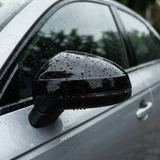
What remains risk-free: aesthetic elements that do not modify the engine management or the structure. Trunk lips and spoilers, mirror caps, diffusers, grille inserts, extended paddle shifters, valve stem caps, door sills. These parts can be installed and removed without leaving a trace.
What becomes sensitive: downpipes, remapping, open intakes, and aggressive lowering. On an M3 G80, the slightest remapping is detectable by the dealer via the ECU write counter — even if erased. This is the number one reason for engine coverage refusals.
Our advice for sensible customization consists of three steps. First, a trunk lip that refines the sedan's line and recalls the CS. Next, aluminum paddle shifters, which transform the feel at every gear change for a negligible budget. Finally, targeted carbon elements: mirrors, front lip, grille surround.
One point too often overlooked: always keep the original parts. An M3 restored to factory configuration at resale reassures the buyer and only takes a little time. The removed parts also sell very well among enthusiasts.
Regarding installation, prefer 3M adhesive and original clip installation rather than drilling. No holes in the bodywork means no traces, no corrosion, no loss of value. On our BMW lips and our BMW grilles, always check the model and year reference before ordering.
Real costs over 3 years: numerical simulation
Annual budgets give a partial picture: it is over three years of ownership that the truth appears, depreciation included. Let's take a realistic and frequent scenario: a 2022 M3 G80 Competition xDrive, bought for €82,000 with 30,000 km, driven 10,000 km per year for pleasure use and weekend trips.
| Expense item | Year 1 | Year 2 | Year 3 |
|---|---|---|---|
| Comprehensive insurance | €1,900 | €1,800 | €1,750 |
| Tires | €0 | €1,600 | €800 |
| Services and oil changes | €400 | €750 | €400 |
| Brakes (pads, discs) | €0 | €900 | €1,200 |
| Fuel (10,000 km) | €2,100 | €2,100 | €2,100 |
| Miscellaneous and unforeseen | €300 | €500 | €900 |
| Annual total | €4,700 | €7,650 | €7,150 |
The cumulative operating cost therefore reaches €19,500 over three years, or about €540 per month excluding depreciation. This is the price of a new premium family sedan on a long-term lease, for a 510-horsepower car that provides infinitely more pleasure.
There remains the heaviest item: depreciation. A 2022 G80 bought for €82,000 resells for around €63,000 to €66,000 three years later with 60,000 km on the clock. The loss therefore stands between €16,000 and €19,000, or about €500 per month extra.
Two levers significantly reduce this bill. Buying a car that has already absorbed its first depreciation — typically a 3-year-old example rather than a 1-year-old — halves the monthly loss. And a desirable configuration, in xDrive with bucket seats and carbon package, systematically sells faster and for more.
Key takeaways
Total real budget including everything: €1,000 to €1,100 per month for an M3 G80 Competition driven 10,000 km per year, depreciation included.
Tires and brakes alone represent nearly 25% of operating expenses: do not discover them after purchase.
An example still under manufacturer warranty or BMW Premium Selection is well worth the extra €3,000 asked: a single major intervention on the S58 pays for it.
Verdict: should you buy a used M3 G80 / M4 G82?
Yes, and it is even one of the safest M's to buy used. The S58 is robust, the ZF8 is indestructible, the xDrive is proven, and the supply is wide enough to choose an impeccable example. The overall rating of 8.5/10 in reliability is only hampered by sometimes finicky electronics and expensive consumables.
Target a Competition 2022-2023 under warranty, 100% BMW history, never remapped, with documented short oil changes. And if your heart is torn with the older generation, our BMW M3 F80 / M4 F82 reliability guide will give you the complete comparison.
Want to personalize your future M? Discover our BMW performance accessories, our BMW lips, our BMW grilles and our BMW paddle shifters — the M Performance touch that finishes the car.
Frequent searches: used bmw m3 g80, used bmw m4 g82, bmw m3 g80 reliability, bmw m3 g80 review, bmw m3 g80 problem, s58 engine reliability, bmw m3 g80 used price, used bmw m3 competition, used bmw m4 competition g82, used bmw m3 g80 xdrive, used bmw m3 cs g80, used bmw m4 cs g82, used bmw m3 touring g81, used bmw m3 g80 Germany.
Other BMW reliability guides
The M3 comes in six generations with radically different characters, and the maintenance budget varies from half to triple depending on the engine. Before signing, compare it to the other used BMW M's we have put on the dyno:
- Used BMW M3 E30: the S14 with individual throttle bodies and the hunt for corrosion
- Used BMW M3 E36: six-cylinder S50/S52, Vanos and weak points
- Used BMW M3 E46: rod bearings and cracked rear subframe
- Used BMW M3 E90/E92: the naturally aspirated V8 S65 and its bearings
- Used BMW M3 F80 / M4 F82: The S55 Twin-Turbo Six-Cylinder Put to the Test
- Used BMW M2 F87: N55 vs. S55 Competition—Which Should You Choose?
- Used BMW M5 E60: The S85 V10 and Its Connecting Rod Bearings
- Used BMW 1M E82: The Limited-Edition N54-Powered Series That Became a Collector's Item
Recevez nos prochains guides en avant-première
Tutos pose, comparatifs aftermarket vs origine, sélection M Performance/AMG/RS, codes promos exclusifs.