Buying a Used Volkswagen Golf 7: Our Complete Reliability Guide
Used Volkswagen Golf 7: Our Complete Reliability Guide
The Volkswagen Golf 7 is probably the most sought-after used compact car on the French market. Produced from 2012 to 2020, it was the first Golf to introduce the MQB modular platform, marking a real technological leap compared to the Golf 6: a body lightened by around 100 kg, a stiffer chassis, downsized engines, and significantly richer standard equipment. As a result, hundreds of thousands of examples are now on the road in France, with extremely variable mileage, engines, and maintenance conditions. This means the difference between a good and a bad deal can represent several thousand euros in repairs. This comprehensive guide gives you practical benchmarks: which engines to favor, which weaknesses to watch out for, what checklist to use during the test drive, and how to personalize your Golf 7 once the purchase is finalized.

The Golf 7 in brief: a compact car that became the benchmark
Launched in France at the end of 2012, the Golf 7 was the first mass-market model to use the Volkswagen Group's MQB platform. In practical terms, this means a shared architecture with the Audi A3, Seat Leon III, and Skoda Octavia III: mechanical parts, running gear, and some electronics are common. This is excellent news for maintenance, as the availability of wear parts and accessories remains very broad, including aftermarket options.
The Golf 7's career is divided into two major periods, which you need to know how to identify even before discussing the price.
Phase 1 (2012-2016): the "original" Golf 7
Models from 2013 to 2016 are recognizable by their clearly separated headlights, their simpler taillights, and, inside, a multimedia system with a 5 or 5.8-inch screen surrounded by physical buttons. These are now the most affordable examples on the market. They benefit from mechanics that are now well known by mechanics, but often have high mileage and very limited driver assistance systems.
Phase 2 (2017-2020): the facelift that changes everything
The 2017 facelift brings more widespread LED lights, redesigned bumpers, dynamic turn signals on high-end trims, and above all, a significantly modernized interior: 8 or 9.2-inch capacitive screens, standard or optional Apple CarPlay and Android Auto, and the Active Info Display digital instrument cluster on the best-equipped versions. On the mechanical side, the arrival of the 1.5 TSI EVO to replace the 1.4 TSI is the most important change. If your budget allows, a Phase 2 remains the best compromise between modern driving comfort and already well-advanced depreciation.
The trims to know
On the French market, you mainly encounter the Trendline, Comfortline, Carat, Sound, Match, IQ.Drive, and Lounge trims, plus the sporty GTI, GTD, GTE, and R versions. The Comfortline constitutes the reasonable base (automatic climate control, cruise control, alloy wheels), the Carat adds mixed upholstery, high-performance headlights, and often navigation. Warning: on the Golf 7, a large part of the equipment was a paid option. Two cars of the same trim can therefore be very differently equipped. Always ask for the original options sheet, identifiable via the chassis number at a dealership.

Which engine to choose on a used Golf 7?
This is the central question, because the Golf 7 was offered with an exceptionally wide range of engines. The right choice depends above all on your annual mileage and your type of trips.
TSI gasoline engines
The three-cylinder 1.0 TSI (85 and 115 hp, from 2015) is a pleasant, economical, and generally reliable block, ideal for urban and suburban use. However, it lacks torque for loaded highway use.
The 1.2 TSI (85 and 105 hp) mainly equips the first years. It works well but remains tight as soon as you load the car. Check the timing chain history on very high-mileage examples.
The 1.4 TSI (122, 125, 140, and 150 hp) is the most widespread block. The 140 hp ACT version with cylinder deactivation offers an excellent pleasure/consumption ratio. The first models may have experienced oil consumption and timing chain tensioner issues: demand the invoices.
The 1.5 TSI EVO (130 and 150 hp, from 2017) is now the best gasoline recommendation. Modern, smooth, much more economical than its power suggests, it has only seen a few corrective software adjustments on the very first examples.
TDI diesel engines
The 1.6 TDI (90 to 115 hp) is the choice of pure economy, with real averages often below 5 l/100 km on the road. However, it hates short and repeated trips, which saturate the particle filter.
The 2.0 TDI (150 and 184 hp) remains the grand tourer of the range: generous torque, decent operating silence, contained consumption. This is the engine to favor if you exceed 20,000 km per year, especially on the highway.
General point of vigilance on diesels: the EGR valve, the particle filter, and, on some early production models, the software update campaigns related to the EA189 engine issue. Ask if the campaign has been carried out and have the history checked with the network.
GTI, GTD, GTE, and R: the performance versions
The GTI (220 hp in Phase 1, 230 hp in Phase 2, the Performance Pack bringing the whole to 230 then 245 hp, the Clubsport to 265 hp, and the Clubsport S to 290 hp) remains a safe bet on the used sports market. Its 2.0 TSI EA888 is robust if it is maintained with short oil changes, but watch the oil consumption and the condition of the clutch on the manual gearbox.
The GTD (184 hp) offers a more road-oriented approach, with real driving pleasure and very reasonable consumption.
The Golf R (300 then 310 hp, 4Motion all-wheel drive) is the most exclusive and sought-after. Beware of reprogrammed examples without traceability: a heavily modified R without history is a major financial risk.
The hybrid rechargeable GTE, however, requires specific checking of the battery health and the functionality of the charging.
Manual gearbox or DSG?
The 5 or 6-speed manual gearbox is simple and inexpensive to maintain: watch the clutch and the dual-mass flywheel. On the automatic side, the Golf 7 used the dry DSG7 (DQ200) on the least powerful engines and the DSG6/DSG7 with oil bath on the most torquey blocks. The oil bath DSG is known to be more durable, provided that the gearbox oil change was carried out at the recommended intervals (generally every 60,000 km). On a dry DSG, a marked jerk when cold, a shake when starting on a hill, or an intermittent light should make you run away or negotiate very firmly: a mechatronic costs thousands of euros.

Golf 7 reliability: the weaknesses to know
Overall, the Golf 7 ranks in the upper average of its category in terms of reliability, provided it is maintained according to the book. Here are the defects that come up most often in workshops.
- Water pump and thermostat: this is the most frequent weakness on TSI blocks. A trace of dried coolant on the block or a dropping level should alert you.
- Tensioner and timing chain on the first 1.2 and 1.4 TSI: a metallic rattling sound on cold start is the classic symptom.
- Oil consumption on some 2.0 TSI and 1.4 TSI: ask if regular top-ups are necessary between two oil changes.
- Dry DSG gearbox mechatronic: jerks, refusal to engage, gearbox light.
- Particle filter and EGR valve on diesels used mainly in the city.
- Panoramic sunroof leaks: clogged drains causing leaks into the front footwells and the trunk.
- Multimedia electronics: screens that no longer turn on or a temperamental touchscreen, mainly on some Phase 1 head units.
- Running gear: stabilizer bar ball joints and control arm bushings that clunk on degraded roads, normal wear beyond 120,000 km.
- Turbo and geometry actuator on very high-mileage diesels.
- Body noises and trim squeaks: not mechanically serious, but a good indicator of the past use of the car.
Purchase checklist: 12 points to check before signing
- Complete maintenance history: stamped service book or invoices, with oil changes at short intervals (ideally every 15,000 km, not 30,000).
- HistoVec report and check of the administrative status certificate (absence of liens and oppositions).
- Technical inspection of less than six months, without major failures, and consistency of the mileages recorded during successive inspections.
- Cold start mandatory: this is the only time we hear the chain, injector, and turbo noises.
- Coolant level and color, absence of deposits on the expansion tank.
- Oil level and cleanliness, absence of emulsion on the filler cap.
- Reading fault codes with a scanner: essential, including recently cleared codes.
- Test of at least 20 minutes, including city, road, and a section of highway, with passage over speed bumps to listen to the running gear.
- DSG gearbox behavior when cold then hot, uphill and in reverse.
- Condition of the undercarriage on the lift: corrosion, traces of impact, missing protections, alignment of the welds.
- Homogeneity of the bodywork shades and regularity of the door gaps, signs of a repair after an accident.
- Tire wear: asymmetrical wear reveals a geometry problem or a poorly repaired impact.
If the seller refuses a cold test drive, a lift inspection, or a scanner reading, consider that it is a sufficient warning signal to walk away. The Golf 7 market is ample enough to allow yourself to be demanding.

Personalize and improve your used Golf 7
Once the car is purchased, the Golf 7 is a great playground: its massive distribution guarantees a very broad accessory offer, and its tight design lends itself particularly well to discreet additions. Here are the most relevant personalization areas, from the most visible to the most practical.
Aerodynamics and exterior style
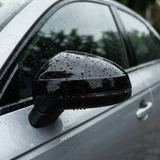
The trunk spoiler remains the most visually effective modification: it extends the roofline and immediately gives a sportier character to the silhouette, without touching the structure. The front bumper lips, or splitters, visually lower the front end and break the slightly high effect of the original bumpers. At the rear, a diffuser comes to structure the lower bodywork. On the sides, the side skirts and the fender flares allow you to obtain a coherent whole. Finally, the mirror caps in carbon finish or glossy black offer one of the best visual effect/price ratios on the market, with an installation in a few minutes and without specific tools.
Interior and driving comfort
Inside, the elongated paddle shifters transform the use of a DSG into manual driving, with a much more natural access with the fingertips. A steering wheel cover in leather or microfiber gives back the charm of a steering wheel polished by the years, while improving grip. The aluminum pedals, the backlit door sills, and the LED ambient lighting complete the atmosphere without distorting the original finish. Don't forget the custom mats and a good trunk organizer: on a used car, protecting what remains in good condition is as profitable as improving the aesthetics.
Maintenance and restoration
A Golf 7 of more than seven years deserves a beauty makeover: renovation of yellowed lights, treatment of the leather or fabric of the seats, degreasing and polishing of the bodywork, ceramic protection or wax. These operations cost little and save considerable time at the time of resale. The leather care kits, the exterior plastic renovators, and the wheel cleaning products are part of the most profitable purchases on a used compact car.
What is best to avoid
Stay cautious about heavy modifications: engine reprogramming without follow-up, removal of pollution control elements, extreme lowering, or non-approved exhaust lines. Beyond the mechanical risks, these modifications pose insurance, technical inspection, and resale problems. The golden rule on a used Golf 7: personalize the style and comfort, keep the mechanics compliant.
Budget, valuation, and negotiation
The prices of the Golf 7 vary enormously depending on the engine, the trim, the mileage, and above all, the history. The very high-mileage Phase 1 in small engines occupy the bottom of the market, the recent Phase 2 in 1.5 TSI or 2.0 TDI well equipped are clearly above, and the GTI like the Golf R in good condition retain a particularly solid valuation, especially on the original and low-mileage examples.
Three negotiation levers almost always work: the upcoming maintenance items (timing belt, clutch, DSG gearbox oil change, pads and discs), the tires at the end of their life or mismatched, and the quantifiable aesthetic defects (impacted windshield, scratched rims, yellowed light). Price each item with a real quote, present it calmly, and you will almost always get a gesture. Conversely, never negotiate a major mechanical problem: on this type of car, it is better to give up on the purchase than to buy a project.
FAQ: Used Volkswagen Golf 7
What maximum mileage to accept on a Golf 7?
There is no absolute threshold. A diesel Golf 7 with 200,000 km on the highway with a complete history will often be in better condition than a gasoline with 90,000 km of urban trips without maintenance. The service book counts more than the odometer. In practice, simply demand that the price reflects the next maintenance deadlines.
Gasoline or diesel for a Golf 7 today?
Below 15,000 km per year and with many short trips, a 1.0 TSI, a 1.4 TSI, or a 1.5 TSI is the logical choice. Beyond 20,000 km per year with long trips, the 2.0 TDI remains unbeatable in operating cost. Also take into account the low emission zones in your region, which can restrict the circulation of the oldest diesels.
Is the DSG gearbox reliable on the Golf 7?
Yes, provided it is maintained. The oil bath versions require a periodic oil change and support the mileage very well. The dry versions are more sensitive, especially in intensive urban use. A careful test when cold then hot remains the best free diagnosis.
Does the Golf 7 rust?
Structural corrosion is rare and the body galvanization does its job correctly. Watch rather the poorly done touch-up points, the door bottoms after an impact, and the condition of the calipers and exhaust lines on cars that have driven in the mountains or by the sea.
Can you mount a spoiler or a splitter without drilling?
Yes in the vast majority of cases. Most of the trunk spoilers and bumper lips designed for the Golf 7 are installed with a high-performance double-sided adhesive of the 3M type, after a careful degreasing of the surface. Respect the recommended installation temperature, generally above 15 °C, and let the glue set for 24 hours before washing the car.
Which wear parts to plan first?
On a Golf 7 exceeding 120,000 km, anticipate the pads and discs, the stabilizer bar ball joints, the battery, the windshield wipers, and, depending on the engine, the water pump. These are low-cost items individually, but they add up quickly if everything happens at the same time.
Conclusion
The Golf 7 more than deserves its reputation: versatile, pleasant to drive, well-built, and backed by a vast network of parts. Its main risk is not mechanical, it is human: too many examples have been maintained with the bare minimum. By applying the checklist above, by prioritizing a phase 2 in 1.5 TSI or 2.0 TDI with an impeccable history, and by keeping a budget reserve for the first top-ups, you put all the chances on your side. Then, all that remains is to give it character: a spoiler, splitter, mirror caps, paddle shifters, and interior trim are enough to transform a sensible compact car into a car that truly reflects you.
Golf 7 phase 1 or phase 2: the timeline of year-by-year evolutions

Before comparing two ads, you need to know exactly where the model year sits in the model's career. Between a 2013 Golf 7 and a 2019 Golf 7.5, the difference in equipment, multimedia, and engine is considerable, while the commercial designation remains identical. The timeline below summarizes the milestones that matter when buying.
Golf 7 engine comparison table: which one for which use?

The table below summarizes the main engine families offered on the Golf 7 and puts them up against a usage profile. The consumption indications are rough estimates observed in real use, which vary greatly depending on the route, load, and driving style.
| Engine | Ideal use | Consumption estimate | Main point of vigilance |
|---|---|---|---|
| 1.0 TSI | city and peri-urban | 6 to 7 l/100 km | limited torque under load |
| 1.2 TSI | short trips, tight budget | 6 to 7.5 l/100 km | timing chain |
| 1.4 TSI / ACT | versatile | 6 to 7.5 l/100 km | oil consumption, tensioner |
| 1.5 TSI EVO | best petrol choice | 5.5 to 7 l/100 km | initial software update |
| 1.6 TDI | highway, maximum fuel economy | 4.5 to 5.5 l/100 km | DPF in urban use |
| 2.0 TDI | heavy highway user | 5 to 6 l/100 km | EGR, high-mileage turbo |
| GTI / GTD | pleasure + daily use | 6 to 9 l/100 km | clutch, oil change history |
| Golf R 4Motion | all-season performance | 8 to 11 l/100 km | untracked reprogramming |
Annual maintenance budget of a Golf 7: what to expect
Many buyers only reason about the purchase price, while the real cost of a used Golf 7 is played out over the first three years of ownership. Between routine maintenance, wear parts to be replaced, and the reserve to plan for a mechanical unforeseen, it is prudent to reason in a global envelope rather than isolated lines. The gauge below illustrates the typical distribution observed on a compact car of this generation.
Golf 7 versus the Golf 6 and the Golf 8: what to choose today?
The Golf 7 is located at an interesting balance point of the market. Compared to the Golf 6, it brings superior body rigidity, notable weight reduction, and much more modern electronics — but the Golf 6 remains unbeatable on the entry ticket and on the simplicity of maintenance, as detailed in our used Golf 6 reliability guide.
Compared to the Golf 8, the Golf 7 retains an advantage rarely highlighted: an ergonomics with physical buttons that many users prefer to the all-touch interface of the next generation. The Golf 8 offers, on the other hand, more advanced driving aids and light hybridization on several blocks. Our used Golf 8 buying guide compares these two generations point by point.
On the most discussed mechanical aspects, two complementary readings are worth a look before signing: our analysis of the reliability of the DSG7 DQ200 gearbox and that of the 1.4 TSI 150 hp engine, two components that we find massively on Golf 7 ads.
Personalizing your Golf 7 without compromising resale

The strength of the Golf 7 on the accessory market lies in its diffusion: the parts developed for it are numerous, well-fitted, and often installed without drilling. The winning logic consists of prioritizing reversible modifications, which enhance the car without scaring the future buyer.
On the exterior side, the most effective trio remains the trunk spoiler, the front bumper blade, and the mirror caps. You will find the compatible references in our collections Volkswagen spoiler, Volkswagen bumper blade and Volkswagen mirror cap. For a more assertive front face, the collection Volkswagen grille offers alternatives to the original grille.
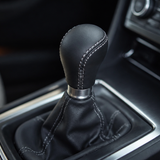
Inside, the two interventions with the best effect/price ratio are the paddle shifters extended on the DSG versions and the Volkswagen gear shift knob on manual gearboxes, whose original finish shines with the years. The whole offer by brand is grouped in the Volkswagen performance accessories universe.
If you are aiming for a GTI, our dossier on the 10 possible modifications on a Golf 7 GTI without losing the warranty details the limits not to cross, and our Golf 7 GTI and R tuning guide presents the most coherent aesthetic combinations.
In-depth FAQ — buying a used Golf 7 in 2026
How to recognize a Golf 7 phase 2 from a phase 1 on an ad?
The fastest landmark is the interior: a touch screen bordered by capacitive buttons without physical knobs signals a phase 2. On the exterior, the redesigned bumpers and the thinner LED signature taillights confirm. Finally, the presence of a 1.5 TSI EVO in the technical sheet catalog is a definitive clue, as this block never equipped the phase 1.
Which used Golf 7 to choose for a first purchase with a small budget?
A phase 1 in 1.2 or 1.4 TSI, manual gearbox, Confortline trim, with a complete maintenance history, remains the most rational compromise. The manual gearbox removes the mechatronic risk, and these engines benefit from a very wide parts offer. Always prioritize a thick maintenance file to a low counter without justification.
Should you avoid a diesel Golf 7 because of low emission zones?
It all depends on the Crit'Air sticker associated with the vehicle and the rules specific to your urban area, which evolve regularly. The reflex to have is to check the exact classification of the targeted model year and the locally announced restrictions calendar before committing, especially if you drive daily in the city center.
How to test a DSG gearbox during a twenty-minute test drive?
Start with a cold engine, in reverse then forward, in a climb if possible: that is where the clutch jerks appear. Then follow with brisk accelerations and mid-range revs, then a phase of slow traffic with repeated stops. Any shaking, dead time or jerk when shifting the first gears must be taken seriously.
Does a modified Golf 7 sell less well?
It depends entirely on the nature of the modifications. Reversible and well-installed aesthetic elements — spoiler, mirror caps, paddles, knob — are generally neutral, or even enhancing to an amateur buyer. On the other hand, an untracked engine reprogramming, an extreme lowering, or a non-approved exhaust line mechanically reduce the number of potential buyers. Always keep the original parts.
How to detect a tampered mileage on a Golf 7?
Cross three sources: successive technical inspection reports, the network maintenance history, and the real wear of the contact points (steering wheel, knob, clutch pedal, driver seat). An inconsistency between a low counter and a polished steering wheel is a strong signal. Our guide to detecting accidents and tampered mileages details the complete method.
Is the panoramic sunroof an equipment to avoid on a used Golf 7?
It is not to avoid, but it requires an additional check. Check the absence of humidity or traces of old infiltration in the front foot mats and under the trunk carpet, and open then close the roof completely to listen to the mechanism. A periodic cleaning of the drains is enough to prevent almost all problems.
What is the best time of the year to buy a used Golf 7?
The used market is traditionally more favorable to the buyer at the end of the calendar year and during the low periods of winter, when sales times lengthen. Conversely, spring concentrates demand and tightens prices. However, stay guided by the quality of the file: a good example bought in spring will always be worth better than a doubtful example discounted in January.
Golf 7 1.6 TDI (90, 105, 110 and 115 hp): what the little diesel is really worth

The previous section ranks the 1.6 TDI in the "pure fuel economy" section and moves on. Yet it is the most represented engine in the used Golf 7 fleet in France, and the one that generates the most precise questions: the reliability of the 1.6 TDI 115, that of the 105 and the 110, the injectors, the EGR valve and the particle filter each come back several hundred times a month in searches. It deserves better than three lines.
EA189 or EA288: the real dividing line
Under the single commercial designation "1.6 TDI" coexist two engine families. The first model years take the EA189 block inherited from the Golf 6, replaced in the middle of the career by the EA288, entirely redesigned around its pollution control system.
The distinction is not academic: it is the EA189 that is concerned by the update campaign of the group's diesel engine file, and it is him that you must check first on an early production example. On the EA288, the recycling of exhaust gases and the treatment of nitrogen oxides are architectured differently, which changes the nature of the failures encountered at high mileage.
The only way to know what you are buying is to have the three-letter engine code read on the booklet plate or on the laptop, then ask the network if the campaign was applied on this precise serial number. A seller who answers "I don't know" without offering to check tells you above all that he has never opened the maintenance file.
The items that come back in the workshop
The EGR valve is at the top of the list. It gets clogged when the car never reaches its operating temperature, and the problem manifests as a lack of power when cold, an intermittent engine light, and sometimes black smoke when accelerating. A car that has spent its life on six-kilometre journeys should be ruled out, regardless of its displayed mileage.
The particle filter follows the same logic: it doesn't break down, it gets clogged due to incomplete regenerations. A diagnostic tool reading gives the soot level and the number of kilometres since the last successful regeneration — two values that tell the real story of how the car has been used far better than the seller's pitch.
The glow plugs are a standard wear part, but their gradual failure is one of the few symptoms that a warm test drive completely masks. This is why a cold start, with the engine having spent the night outside, is non-negotiable on a used diesel.
The injectors round out the list. A shaky idle, irregular rattling, or a strong smell of diesel when opening the bonnet justifies a return flow test before making any commitment. This is the most expensive item in the lot, and the only one that can turn a good deal into a money pit.
Timing belt: what we can say and what we cannot
Unlike the small TSI petrol engines from the same period, which use a chain, the 1.6 TDI is driven by a timing belt. It must therefore be replaced at the appropriate interval, and this interval is one of the most expensive items in the car's life cycle.
However, the exact interval cannot be stated here: the published values vary depending on the model year, engine code, and country of sale, and the maintenance schedules have been revised over the course of the model's production. Forums, parts supplier catalogues, and dealer plans do not all give the same figure. The only authoritative reference is the maintenance schedule issued by the dealer network for your chassis number, or the service book of the car you are looking at. Take the time to ask: it's free, and it can sometimes shift the negotiation by several hundred euros.
One last thing, often forgotten on diesels of this generation: the battery and the idle cut-off system age together. A start-stop that no longer cuts out is not necessarily a fault, it is often a battery at the end of its life or a worn-out current sensor — a topic we cover in detail in our guide on disabling start-stop and its impact on the warranty.
A Golf 7 1.6 TDI bought on these criteria is an economical and durable car. The same one bought based solely on its mileage is a gamble: with the same odometer reading, two cars can show years of difference in actual wear depending on the type of journeys they have seen.
Decoding a used Golf 7 ad: Leboncoin, La Centrale and the question of the real price

The budget section explains how to negotiate a car you have already found. There is still the step before that, where you spend hours scrolling through ads: le bon coin used Golf 7 and La Centrale used Golf 7 are by far the two most searched queries around this model after the model name itself. Here is how to read these pages without wasting your time.
Filter first, look later
The first mistake is to sort by price in ascending order. This brings up crashed cars, vehicles sold for parts, and intermediary ads that display a price excluding fees. Sort by publication date and set your filters first: model year, engine, gearbox, maximum mileage.
The second is to reason based on mileage alone. On this model, two cars with the same odometer reading can have radically different mechanical conditions depending on the phase, the engine, and the type of journeys. A filter by year and by engine is better than a filter by mileage.
The third is to limit yourself to a radius of thirty kilometres. The Golf 7 is produced in very large series: widening the search area to an entire region multiplies the candidates without changing the budget, and puts you in a position to refuse rather than accept.
What the ad text betrays
An honest ad is boring: it lists the equipment, gives the maintenance history, specifies what has been done and what needs to be done. The formulations that should make you suspicious are always the same.
"New engine" without an invoice: at best it is a standard exchange, at worst an improvised repair. "Timing belt done" without mileage or date: the information is unusable as is. "First owner" when the registration card shows several owners: the seller is testing your attention.
Conversely, a seller who spontaneously sends you the vehicle's administrative history report, the successive technical inspection reports, and a photographed service book saves you a visit. This is also the one who will negotiate the least, and that is normal.
The valuation: why we do not publish a figure
This is the question that comes back the most: what is the price of a used Golf 7? It is often doubled by a specific budget in mind, such as a used Golf 7 for €10,000. We will not answer it with an amount, and it is better to explain why than to give a convenient figure.
The three references that buyers rely on do not measure the same thing and therefore diverge. A trade-in valuation estimates what a professional would give you for your car. Marketplace estimators rely on the prices asked by the sellers in their own database. And the real transaction price, the one at which the car actually changes hands, is published by no one. Between the first and the second, the gap is structural, not anecdotal.
Add to that the fact that an amount written today would be obsolete in six months, and the point is made: a figure published here would be at best useless, at worst misleading. The reliable method can be summed up in one sentence: find twenty to thirty truly comparable ads yourself — same phase, same engine, same gearbox, narrow mileage range — and look at the median, not the lowest price. The bottom of the list is almost always occupied by incomplete files.
This reasoning applies to the entire MQB family: if your budget leaves you hesitating, compare with our reliability guide for the Audi A3 8V, S3 and RS3, built on the same platform and often found at the same price level with a superior finish.
Refreshing the contact points of a trade-in Golf 7


The steering wheel and the gear shift knob are the two parts that most quickly betray high mileage, and two of the cheapest to replace. The prices and availability are those displayed on the product sheets, which are the sole authority.
Importing a used Golf 7 from Germany, Belgium or Luxembourg

As soon as a buyer finds the French market too expensive, the same idea comes back: look for a used Golf 7 in Germany, sometimes a used Golf 7 in Luxembourg or Belgium. It is a serious lead — the Golf is a national car beyond the Rhine, the offer there is plentiful and the finishes are often better equipped. It is also the lead where you lose the most money when you approach it as an amateur.
Why prices really differ
The gap is not due to any generosity of the German market. It is due to volume: a model sold in very large quantities in a given market mechanically has a wider offer and longer sales times, two factors that weigh on the asking prices.
It is also due to the structure of the equipment. National catalogues did not offer the same packs, and a well-equipped German car can compare to a superior French finish. Conversely, an entry-level car there is truly stripped down: a cheap German used Golf 7 is often a Golf without automatic air conditioning or driving aids.
Finally, the usage culture is not the same. A car that has lived on the highway at high speed shows high mileage but gentle mechanical wear; it is often a better purchase than a French car with a low odometer that has lived in the city. On a diesel, this difference is decisive.
The administrative chain, without invented figures
For a used vehicle already registered in a country of the Union, the journey consists of four pieces: the foreign registration certificate handed over by the seller, the tax clearance issued by the French tax administration, the European certificate of conformity from the manufacturer, and the registration request filed online. A recognized and valid technical inspection is also required depending on the situation of the vehicle.
The cost of the registration card depends on the regional scale of the fiscal horse and the situation of the vehicle; it is not the same from one region to another and changes every year. We do not calculate it here: the official simulator of the registration service is the only source that binds someone. Do the simulation before paying a deposit, not after.
Two blind spots deserve to be named. The first is the history: the maintenance reports of a foreign network are not always viewable from France, and a service book stamped abroad is harder to cross-reference. The second is recourse: a dispute with a private seller located in another country is theoretically possible and practically discouraging. An established professional, even a little more expensive, also sells this peace of mind.
After import: homologation and personalization
An imported car sometimes arrives with equipment without an equivalent in the French catalogue, or on the contrary with accessories installed by its previous owner. Before passing the first technical inspection, check that what is mounted is approved: our guide on approved tuning accessories details the markings to require, and the one on spoiler, wing and technical inspection deals with the particular case of aerodynamic elements.
If your imported Golf 7 is a GTI and the urge to upgrade it takes you, our Golf 7 GTI and R tuning guide reviews the modifications that hold up and those that cost you at resale.
On the practical side, our shipping costs are those displayed in the cart: delivery is free up to €14.99 order, charged at €9.95 from €15 to €499.99, and €29.95 from €500. There is no threshold beyond which shipping becomes free again, and we prefer to write it clearly rather than announce a free shipping that does not exist. The warranty and return conditions are in our general terms of sale, which are the sole authority.
Giving character to an imported Golf 7


These parts are installed and removed without irreversible intervention on the bodywork; the method is detailed in our guide on installing a no-drill adhesive trunk spoiler.
Twelve more questions: diesel, ads and import
These twelve questions complete the two previous FAQs, which focused on mileage, fuel choice, DSG gearbox and personalization. They cover the 1.6 TDI, reading an ad and buying outside France, three topics that the article did not address.
Which version of the Golf 7 1.6 TDI is the most reliable?
None of the four power outputs (90, 105, 110 and 115 hp) is intrinsically more robust than another: they are the same architectures with different maps. The criterion that really separates a good car from a bad one is the block family and especially the type of journeys it has seen. A well-maintained 105 hp highway car is better than a neglected 115 hp city car.
How to know if the diesel engine campaign was applied to a Golf 7?
Ask the brand network for a check on the vehicle's chassis number, preferably in writing. It is a free consultation that takes a few minutes and is better than the seller's word. On an early production car, do not conclude until the answer is there.
Is the particle filter of a diesel Golf 7 replaced or cleaned?
Both exist. A filter clogged by incomplete regenerations can often be cleaned, while a filter whose ceramic support is cracked or melted must be replaced. A diagnostic tool reading before purchase, which gives the soot level and the distance since the last successful regeneration, allows to know in which case we are.
Should you avoid a diesel Golf 7 that has always driven in the city?
Without being an automatic condemnation, it is the most unfavorable usage profile for this engine: the EGR valve gets clogged, the intake gets dirty and the particle filter does not regenerate correctly. At the same budget, a petrol car having lived the same usage will be a more secure purchase.
What is the replacement interval of the timing belt on a Golf 7 1.6 TDI?
The published values vary depending on the engine code, the model year, and the country of sale, and the maintenance schedules have been revised over the course of the model's production. We therefore do not advance a figure: ask the network for the maintenance schedule corresponding to the chassis number of the car in question, it is the only authoritative reference.
Is it better to look for your Golf 7 from a private seller or a professional?
A private seller generally offers a lower price and a first-hand account of the car's history; a professional provides a more protective legal framework and a real recourse. The right choice depends above all on your ability to inspect the car: if you don't know how to read the undercarriage, the price difference often ends up going toward repairs.
How to spot a Golf 7 ad that is too good to be true?
Three signs almost always combine: a price significantly below the median of comparable ads, a short and vague description of maintenance, and photos taken from a distance or at night. Add a seller in a hurry to close the deal, and you have the typical profile of a listing to pass up.
Can you negotiate the price of a used Golf 7 from a professional?
Yes, but rarely on the listed price alone. The room for negotiation is more often on the services: a full service carried out before delivery, a set of new tires, or the coverage of an identified maintenance item. Quantify these requests with real quotes rather than asking for a percentage discount.
Is importing a Golf 7 from Germany really cheaper?
There is a difference in asking prices, but it narrows once you add the travel or repatriation costs, the preparation of the registration file, and the cost of the registration certificate, which depends on the regional scale. Run the official simulation and the full calculation before paying a deposit: on a common model, the final savings are often more modest than advertised.
What documents are needed to register a Golf 7 purchased in the European Union in France?
The foreign registration certificate provided by the seller, the tax clearance certificate issued by the tax administration, the manufacturer's European certificate of conformity, and the registration application submitted online. A recognized and valid technical inspection is also required depending on the vehicle's situation.
Does an imported Golf 7 sell less easily?
Foreign origin is a point that subsequent buyers will raise, especially if the service book is stamped in another language. Keeping the entire file — purchase invoice, certificate of conformity, tax clearance, translation of the service book — neutralizes most of the objection. A complete file is better than a long explanation.
Can you customize a used Golf 7 without complicating its technical inspection?
Yes, provided you stick to approved accessories and reversible installations, and do not touch the regulatory lighting or safety elements. Exterior adhesive parts and interior modifications do not pose any difficulty; lighting, suspension, and exhaust are the three areas where vigilance is essential.
In summary: the five-step method
First, locate the model year in the model's production run, phase 1 or phase 2. Then choose the engine based on your actual annual mileage, not your past habits. Always demand a cold start, a lift inspection, and a diagnostic scan. Set aside a maintenance reserve at the time of purchase rather than discovering it along the way. Finally, customize with reversible touches: that is how you get a Golf 7 with character without compromising its resale value.
Recevez nos prochains guides en avant-première
Tutos pose, comparatifs aftermarket vs origine, sélection M Performance/AMG/RS, codes promos exclusifs.